The teachings of Jesus Christ, as recorded in the Bible, emphasize love, compassion, and forgiveness, even toward those we might consider adversaries. One of the most challenging yet transformative commands Jesus gives is to pray for our enemies. In a world increasingly marked by division and conflict, particularly in the political arena, this principle has never been more relevant. As the 2024 U.S. presidential election, featuring prominent figures like Kamala Harris and Donald Trump, stirs deep emotions and polarizes society, the Christian mandate to pray for adversaries offers a pathway to healing and unity. This essay explores the biblical foundation for praying for our enemies, its significance in fostering understanding and compassion, and its potential impact on the current political climate.
Biblical Foundation: Jesus’ Teachings on Praying for Enemies
The command to pray for one’s enemies is rooted in Jesus’ Sermon on the Mount, where He outlines the attitudes and behaviors expected of His followers. In Matthew 5:44 (ESV), Jesus states, “But I say to you, Love your enemies and pray for those who persecute you.” This directive is radical, calling believers to rise above natural inclinations of resentment and retribution. By praying for those who oppose us, we are participating in God’s redemptive work, seeking their well-being and transformation rather than their downfall.
The significance of this teaching is further illuminated by Jesus’ own example. In Luke 23:34 (ESV), as He hung on the cross, Jesus prayed, “Father, forgive them, for they know not what they do.” This prayer, offered on behalf of those who were executing Him, exemplifies the ultimate expression of love and forgiveness. It underscores that prayer for one’s enemies is not merely a theoretical concept but a lived reality in the Christian faith.
The Transformative Power of Prayer in Political Discourse
In today’s political climate, particularly in the context of the 2024 U.S. presidential election, the principle of praying for one’s enemies can serve as a transformative tool for fostering understanding and compassion. The political arena is often characterized by intense rivalry, with opposing parties and supporters viewing each other with suspicion, hostility, and even hatred. This polarization is further exacerbated by social media, where echo chambers reinforce biases and deepen divisions.
However, the act of praying for those on the opposing side, whether they be political leaders or fellow citizens with differing views, can shift one’s perspective. Prayer has the power to humanize our adversaries, reminding us that they, too, are created in the image of God and are deserving of dignity and respect. It allows us to see beyond their political positions and recognize their inherent worth as individuals.
Moreover, prayer can soften our hearts, reducing the animosity we may feel toward those who hold different views. In Philippians 4:6-7 (ESV), Paul encourages believers to bring their concerns to God in prayer, promising that “the peace of God, which surpasses all understanding, will guard your hearts and your minds in Christ Jesus.” This peace can displace the fear, anger, and frustration that often accompany political discourse, enabling us to engage with others more graciously and empathetically.
Promoting Unity and Empathy Through Prayer
One of the most profound effects of praying for our adversaries is its ability to promote unity and empathy. In a polarized society, where individuals often align themselves strictly along partisan lines, it is easy to view those on the other side as enemies rather than as fellow citizens with differing perspectives. This division can lead to a breakdown in communication, mutual respect, and collaboration, all of which are essential for a healthy democracy.
Praying for our adversaries challenges us to move beyond these divisions. It fosters empathy by compelling us to consider the experiences, concerns, and motivations of those we might otherwise dismiss or oppose. This is particularly important in the context of the 2024 U.S. presidential election, where the stakes are high, and emotions are running deep. By praying for candidates and supporters across the political spectrum, we open ourselves to understanding their perspectives, even if we do not agree with them.
The apostle Paul, in his letter to Timothy, emphasizes the importance of praying for all people, including those in positions of authority. In 1 Timothy 2:1-2 (ESV), he writes, “First of all, then, I urge that supplications, prayers, intercessions, and thanksgivings be made for all people, for kings and all who are in high positions, that we may lead a peaceful and quiet life, godly and dignified in every way.” This call to prayer is not limited to leaders with whom we agree; it extends to all, regardless of their political stance. Through such prayers, we seek God’s guidance, wisdom, and justice for our leaders and our nation, fostering a spirit of unity and cooperation.
Bridging Gaps and Promoting Mutual Respect
The practice of praying for our adversaries can also play a crucial role in bridging gaps and promoting mutual respect in a polarized society. In a climate where political differences often lead to personal animosity, prayer can serve as a bridge, connecting individuals across ideological divides. It encourages a posture of humility, recognizing that, regardless of our political affiliations, we all stand in need of God’s grace and guidance.
A real-world example of the power of prayer in bridging divides can be seen in the relationship between the late Supreme Court Justices Ruth Bader Ginsburg and Antonin Scalia. Despite their stark ideological differences, Ginsburg and Scalia shared a deep friendship rooted in mutual respect. Both justices were known for their sharp legal minds and passionate convictions, yet they managed to maintain a relationship that transcended political and judicial disagreements. While their relationship was not explicitly rooted in prayer, it exemplifies the kind of mutual respect and understanding that prayer can foster among those with differing views.
In the context of the 2024 U.S. presidential election, praying for candidates from both major parties, as well as for those who support them, can help to break down barriers of hostility and foster a spirit of mutual respect. It reminds us that, regardless of our political differences, we are all part of the same human family, bound by our shared hopes and aspirations for the future.
The Role of Biblical Wisdom in Political Engagement
The Bible offers timeless wisdom that can guide Christians in their political engagement, particularly in how they relate to those with whom they disagree. Proverbs 15:1 (ESV) states, “A soft answer turns away wrath, but a harsh word stirs up anger.” This proverb underscores the importance of a gentle and measured approach in discussions, especially in the heated atmosphere of political debates. Prayer helps cultivate this gentleness, enabling believers to respond with kindness and patience rather than reacting with anger or hostility.
Furthermore, Jesus’ teaching in Matthew 7:12 (ESV), commonly known as the Golden Rule, instructs, “So whatever you wish that others would do to you, do also to them, for this is the Law and the Prophets.” Applying this principle in political discourse means treating our adversaries with the same respect, fairness, and understanding that we desire for ourselves. Praying for those on the opposite side of the political spectrum can help us internalize this principle, leading to more constructive and respectful engagement.
Practical Insights for Applying the Principle of Praying for Our Adversaries
To effectively apply the principle of praying for our adversaries in today’s political landscape, it is essential to approach it with intentionality and sincerity. Here are a few practical insights:
Start with Self-Reflection: Before praying for others, take time to reflect on your own attitudes and biases. Ask God to reveal any areas of prejudice or animosity in your heart and to replace them with love and compassion.
Pray for Specific Needs: When praying for adversaries, consider their specific needs and challenges. This might include praying for their health, wisdom, or guidance in decision-making. Focusing on their humanity can help shift your perspective from opposition to empathy.
Seek God’s Perspective: Ask God to help you see your adversaries through His eyes. This can lead to a deeper understanding of their struggles, motivations, and concerns, fostering a more compassionate attitude.
Extend Prayer to Action: Let your prayers inspire actions that promote understanding and unity. This might involve engaging in respectful dialogue, seeking common ground, or participating in initiatives that bridge political divides.
Encourage Others to Pray: Share the importance of praying for adversaries with others in your community, encouraging collective prayer for the nation’s leaders and citizens. This can create a ripple effect, spreading a spirit of unity and reconciliation.
Conclusion
The command to pray for our adversaries, as taught by Jesus, holds profound significance for Christians navigating the complexities of a divisive political landscape. In the context of the 2024 U.S. presidential election, where tensions are high and divisions deep, this principle offers a pathway to understanding, compassion, and unity. By praying for those with whom we disagree, we can bridge gaps, promote mutual respect, and contribute to a more just and peaceful society. Rooted in biblical wisdom and practical application, the practice of praying for our adversaries has the potential to transform not only our hearts but also the broader political discourse, fostering a spirit of reconciliation and healing in a polarized world.
First they came for the Communists And I did not speak out Because I was not a Communist
Then they came for the Socialists And I did not speak out Because I was not a Socialist
Then they came for the trade unionists And I did not speak out Because I was not a trade unionist
Then they came for the Jews And I did not speak out Because I was not a Jew
Then they came for me And there was no one left To speak out for me.
Martin Niemoller
There’s a saying I heard a while ago that’s stuck with me. It goes, “It’s far easier to act like a Christian than it is to react like a Christian.” The month of June offers Christians a chance to put this adage to the test. I’m of course speaking of Pride Month, 30 days of celebrating LGBTQ.
Wikipedia defines Pride Month as, “. . .a month, typically June, dedicated to celebration and commemoration of lesbian, gay, bisexual, and transgender pride.” (bold mine).
Dictionary.com offers an expanded definition stating, “Pride Month is a month-long observance in celebration of lesbian, gay, bisexual, transgender, and queer people—and the history, culture, and contributions of these people and their communities. It is not limited to people with these sexualities or gender identities. Pride Month also celebrates and is celebrated by those with a range of other identities considered outside of the cishet [heterosexual] mainstream, including people who are intersex, nonbinary, asexual, pansexual, aromantic, two-spirit, or who identify in other ways or are questioning their sexual or gender identity or expression.” (bold mine).
Sam Won and Akos Baloh offer a historic definition of Pride Month writing, “Pride month is a major cultural event of the LGBTIQ+ community to commemorate cultural ideas and histories that formed them. It is in June to commemorate the historical event of the Stonewall Riots in June 1969, which is seen as the catalyst that galvanised a civil rights movement. Symbolically, Stonewall is seen as the ‘exodus’ that began the liberation of LGBTQ+ people from repression.“
In essence, Pride Month is a time dedicated to commemorating and celebrating LGBTQ identity and ideology. The activities include parades, speeches, the display of flags, media coverage, and targeted business marketing aimed at the LGBTQ community. Notably, there are even “churches” that observe Pride Month. It appears that there are few boundaries defining what is deemed suitable for celebrations during Pride Month.
Reacting Like a Christian
The focus of this essay is not to complain about Pride Month, but instead to offer an answer to the question – How should a Christian react to Pride Month?
The task of the Christian is not to whine about the moment in which he or she lives but to understand its problems and respond appropriately to them.
Carl R. Trueman
To answer the question, I will review what other Christians have suggested as an appropriate response, followed by insights from the Scriptures, and conclude with my opinion.
Where to start?
Where does one even begin delving into any topic of interest? Obviously, the trusty old Google! So, imagine my surprise when I embarked on my initial quest for “ideas on how to protest Pride Month” and ended up submerged in a sea of results on how to embrace and celebrate Pride instead. I mean, come on Google, show a little neutrality, will you? I want to give them the benefit of the doubt, but it seems like when it comes to Pride, Google might have misplaced its sense of inclusion.
Next, after realizing that Google might have some biased search results, I decided to consult the all-knowing artificial intelligence (AI), the trendy guru of the digital age. I’ve come to occasionally use AI for my writing endeavors and for solving all those random questions that pop into my head when exploring topics like this. Now, onto more pressing matters – How should a Christian react to Pride Month? According to ChatGPT. . .
This response seems to prioritize a Christian approach, underscoring the significance of participating in respectful and compassionate dialogues with individuals who have diverse beliefs, making an effort to comprehend LGBTQ+ viewpoints, and integrating prayer. It highlights the lack of a universally applicable Christian reaction. In essence, according to AI, there is no one-size-fits-all approach to Pride Month.
Next, we seek guidance from influential figures within the Christian community on effectively navigating the intricacies of Pride Month, all the while embodying the compassionate love of Christ.
What do other Christians suggest?
There is an abundance of opinions regarding how to respond to Pride Month. As the saying goes, “Opinions are like belly buttons, everyone has one.” Nevertheless, the varied opinions of others provide a foundation for exploring solutions to our inquiries. This process underscores the importance of Christians identifying reliable sources for guidance when confronted with such issues. Three sources that I often turn to, and consider to be trustworthy Christian voices, are as follows:
From GotQuestions.org, “It’s important to stand for biblical ideals. We ought not celebrate what Scripture condemns. Yet the gospel is not served if Christians contribute to false stereotypes (e.g., homophobia) about the faith. When sexuality and gender are filtered through unbiblical cultural views, the best tactic for most Christians is like that of the ‘conscientious objector’: polite, peaceful, firm refusal to actively participate in Pride Month events without demanding others to follow suit.“
What the article suggests is that Christians shouldn’t celebrate Pride Month. Instead, we should be loving, yet resistant to what Pride stands for.
The article continues with, “In short, the best Christian response to Pride Month is polite non-participation. Followers of Jesus should decline to have anything to do with “Pride” events. We should speak truth in love when given an appropriate chance (Ephesians 4:15). It’s good to articulate why we cannot endorse the ideas or assumptions behind the promotion of ‘Pride.’ We should avoid giving worldly culture exactly what it wants: ammunition with which to falsely accuse the gospel of hateful intolerance (1 Peter 3:15–17). Many will be offended by truth spoken in humility and love (1 Peter 4:4)—but that means their conflict is with God, not with us (Galatians 1:10).“
In other words, refrain from being hypocritical by providing Pride advocates with grounds to label you as intolerant and patronizing.
Furthermore, “At the very least, Christians should never actively participate in anything that blatantly defies God (Acts 5:29), even though defiance of worldly expectations concerning Pride Month might mean suffering social and legal consequences. When so led by the Spirit, Christians can and should give a sound explanation for their views (1 Peter 3:15–17) and why others would be wise to follow suit. What we should not do is respond in panic or with fear that we have “lost” somehow when culture turns away from God.“
Sam Wan and Akos Baloh published an article on The Gospel Coalition (TGC) site. They write, “Our descriptions have the potential to shape our responses. How we describe LGBTQ+ people will shape our response and interactions with them.” The authors describe two types of “descriptions” – thin and thick.
Thin descriptions are low level and provide little insight into the people you are seeking to understand. Examples of thin descriptors would be reading someone’s blog, social media post, online articles, and/or word-of-mouth. These tend to be very one dimensional.
Alternatively, thick descriptions offer a much richer understanding. Examples would include actual conversations and face-to-face interactions at events. These provide a far more deeper level of engagement and understanding.
The TGC article goes on to say, “Now Christians should not affirm aspects of Pride that celebrate diverse sexual expression antithetical to biblical sexual ethics. But there’s a difference between not affirming sexual ethics, and not relating to persons. Scripture teaches us again and again that while God does not condone sin, he relates with sinners.“
Summarizing the TGC authors, Christians should engage beyond the typical online mediums and meet with real LGBTQ people and those who identify as “allies” to the community. While we should not affirm the beliefs, ideologies, etc., we should engage in conversation to seek understanding and demonstrate love for others, even if we don’t agree with them.
Tim Barnett (aka Red Pen Logic) writes on the Stand to Reason (STR) blog about confused Christians regarding how we should show love for others, especially those we don’t agree with. He writes, “Unfortunately, most people in our society—including some Christians—are confused about genuine love. They conflate acceptance and affirmation with love. Therefore, the people who do not affirm LGBT values are, by definition, unloving. But this is clearly mistaken. It is possible to truly love someone, but not accept and affirm their ideas or behavior.” This is evident to anyone who is a parent. Your child often does things you don’t approve of, but you still love them.
Tim offers advice on what we should do to show love for the LGBT community. He writes, “We should be the first to defend the LGBT community against mistreatment, abuse, and unjust discrimination. Every member of the LGBT community is made in the image of God. Therefore, each one is intrinsically valuable and should be treated with the utmost dignity and respect. Anything less is wicked.“
However, love doesn’t mean celebrating what God deems as sinful. Barnett states, “True love doesn’t support and celebrate wickedness. Rather, it holds fast to what is good. This is not an easy thing to do. The culture is working hard to pull you away from what is good. And it won’t stop at mere acceptance of evil. No, the culture demands that you celebrate it. And if you don’t, ironically, you will be called unloving and bigoted.“
Finally, Tim provides a practical approach for Christians to take during Pride Month – “This month, while the world celebrates LGBT Pride, choose to love your LGBT neighbor by being a light to the world. As an act of love, do something kind for them. Invite them over for dinner. Treat them to a movie or sports event. Laugh together. Spend time getting to know each other. But don’t compromise your convictions.“
Summarizing the three opinions on how a Christian should react to Pride Month starts by firmly upholding the truth of God’s word, followed by showing gentleness and respect while refusing to participate in Pride activities. Additionally, it involves speaking the truth whenever the opportunity arises. Finally, it entails actively working to cultivate “thick” relationships with people who identify as LGBTQ and/or are allies to the community, seizing opportunities to demonstrate Christ’s love for the lost.
We now turn to the conclusion of this essay with my thoughts on how Christians should react to Pride Month.
The Church is in a Spiral of Silence
According to a report by Gallup, 68% of Americans self-identify as “Christian.” With the current US population estimated at 336 million, this would mean that the number of “Christians” in America surpasses 228 million people. This figure is equivalent to the combined population of the top 16 most populated states!
Envision the entire population of California, Texas, Florida, and New York professing their faith as a disciple of Christ Jesus. Furthermore, the combined population of these four states is still less than 50% of the total number of individuals who identify as “Christians.”
Then Jesus told his disciples, “If anyone would come after me, let him deny himself and take up his cross and follow me.”
Matthew 16:24
My point in starting here is to pose a thought-provoking question about the current state of affairs in America. With over 200 million followers of Christ Jesus purportedly living in America today, one might wonder if the country would exhibit its present characteristics if this statistic were indeed accurate.
Would Pride Month exist?
Would marriage be defined as a covenant between two people, regardless of sex?
Would ending the life of an unborn child be defined as “healthcare?”
Would children, through the “help” of a “physician,” be allowed to get therapy, drugs, and surgery to permanently change their bodies?
I could keep asking more questions related to the world we live in today, but the answer would still be the same – No, I would like to believe the US would look entirely different if there truly were 200 million plus disciples of Christ in America today.
Perhaps the number is correct, and many are simply ignorant, apathetic, or lack the courage to stand up for the truth and speak out against the madness? As I began writing this essay I was reminded of one of the most impactful and convicting books I’ve read lately. The book is Eric Metaxas’ Letter to the American Church. The overarching message Metaxas writes about is that the Church has failed to take a stand for God’s truth. And, because of this lack of courage, we should not be surprised by what we are now experiencing (e.g., same-sex “marriage,” polyamory, Pride Month, etc.).
The chapter that stands out is titled “12,000 Pastors.” Metaxas writes about the Nazis and the response from the Protestant church in Germany. At the time there were estimated to be 18,000 pastors in Germany. Some of these Christian leaders wrote a document that came to be known as the Barmen Declaration that stated the German state must not interfere with the Church. Those who signed the declaration were identified as the “Confessing Church.”
Unfortunately, the vast majority of pastors were not willing to sign the document. Metaxas argues they didn’t have the courage to sign even though they knew it was true. By 1935 just 3,000 of the 18,000 pastors stood with the Confessing Church. Incredibly, 3,000 stood with Hitler, and roughly 12,000 did nothing – they were silent.
Silence in the face of evil is itself evil. Not to speak is to speak. Not to act is to act. God will not hold us guiltless.
Author Unknown
Metaxas writes, “If another three thousand or six thousand Protestant pastors had stood with the Confessing Church during this time, the Nazis could never have been able to succeed, which is an extraordinary and heartbreaking thing to consider.” He argues that the church had great cultural power, and it is unlikely Hitler could have taken the action he did if the church would have stood up and spoke out against the violence.
I share this story because, as Metaxas also points out, it mimics what is taking place in the Church today. It’s a concept known as the “spiral of silence,” which is based on the work of German sociologist and political scientist Elisabeth Noell-Neumann. Ironically, she was born in Berlin and lived during the Nazi regime control of Germany. Metaxas also reports that Noell-Neumann was pro-Hitler and had even met him while at university.
The spiral of silence, as Metaxas writes, “Refers to the idea that when people fail to speak, the price of speaking rises. As the price to speak rises, still fewer speak out, which further causes the price to rise, so that fewer people yet will speak out, until a whole culture or nation is silenced.” It’s easy to see how this could be true during the Holocaust where an estimated 6 million Jews and an additional 6 million others were murdered by the Nazis. Surely, many people knew this was wrong (including those doing the killing), but despite the killing, said and did nothing.
I believe a similar situation is occurring in America today. While I may be somewhat facetious in suggesting that not all who claim to be Christians are truly followers of Christ, it is likely that many simply have fallen into a spiral of silence.
They fear losing their job, being labeled a homophobe or bigot, getting shunned by friends and family, etc. I too was once afraid to speak out. However, this is not a “neutral” position – there is no such thing as being neutral.
Whoever is not with me is against me, and whoever does not gather with me scatters.
Jesus, Matthew 12:30
Furthermore, as Metaxas points out, “Just as cowardice begets cowardice, courage begets courage. . .Either we help evil, or we fight evil. Either we speak and thereby help others to speak truth, or we cower in silence and thereby lead others to do the same.” Neutrality is not an option for the true disciple of Christ.
Jesus indicated that one of the requirements for becoming his disciple was to take up your cross, a commitment that everyone present understood as a willingness to sacrifice their life. Luke’s gospel intensifies this message from what Matthew wrote, emphasizing that a disciple must be prepared to take up their cross on a daily basis (Luke 9:23).
So, why do so many remain silent? The reasons are not entirely clear. It is possible that many of those who stay silent are not genuinely committed to the Christian faith. Some may be supportive of LGBTQ lifestyles and do not see it as an affront to God’s teachings. Furthermore, there may be a significant number who are indifferent and apathetic, believing that it does not impact them or their loved ones.
Where do we go from here? How should a true follower of Christ Jesus react to Pride Month? Here are four ways I suggest we should react as Christians.
View the world through the eyes of Christ.
Years ago when I encountered LGBTQ people in person, online, on television, in movies, etc. it disgusted me. I found their behavior intolerable and it angered me to see it. Then something happened and I began asking God to help me see the world the way he sees it. Christ doesn’t look at the world with disgust. He sees the world destroyed by sin and it brings him sorrow.
Jesus wept.
John 11:35
I also aim to recognize the detrimental impact of sin within the LGBTQ community. Rather than feeling disgust, I empathize with feelings of sorrow and sadness for those who are lost. It’s important to acknowledge that there is still hope as long as they have breath in their lungs. Christ’s sacrifice allows all who believe and repent, including those who identify as LGBTQ, to attain eternal life.
Educate yourself on what the Scriptures say about sexuality.
I would argue, ignorance is one of the biggest challenges facing the Church today (apathy being the second), and if you want to react properly you have to know the truth of God’s word as it relates to sexuality. This can take some time, but remember, we are commanded in God’s word to be able to make a defense for what we believe.
But in your hearts honor Christ the Lord as holy, always being prepared to make a defense to anyone who asks you for the reason for the hope that is in you; yet do it with gentleness and respect.
1 Peter 3:15
Furthermore, I would suggest reading from both non-affirming and affirming authors. You need to fully understand both sides of any argument to truly know how to respond. Some books to consider include:
Engage with affirming Christians and non-Christians.
It’s easy to become biased when you never expose yourself to other opinions on a topic. Reading some of the aforementioned books that take an affirming view is a starting point. However, to engage with those who affirm the LGBTQ lifestyle and ideology is an even better way to seek understanding from their perspective.
A fool takes no pleasure in understanding, but only in expressing his opinion.
Proverbs 18:2
Even if you do not personally know anyone who is part of the LGBTQ community, it is highly likely that you will encounter numerous individuals online who are. Although online discussions often yield limited results, they can serve as an initial step towards understanding the perspectives of others.
Take action.
Knowing the truth and being able to defend it with gentleness and respect is a great place to start. However, if you do nothing with the truth it serves little to no value. You need to take action. To do nothing is to be complicit with the problem.
So whoever knows the right thing to do and fails to do it, for him it is sin.
James 4:17
The apostle Paul, writing to his protege Timothy, offers a number of stern, action-provoking words still relevant to disciples of Christ Jesus today. First, he reminds Timothy not to be ashamed of the Truth.
For God gave us a spirit not of fear but of power and love and self-control. Therefore do not be ashamed of the testimony about our Lord,
2 Timothy 1:7-8a
Next, Paul instructs Timothy to endeavor to become a disciple who is approved by God, while steering clear of unfruitful debates.
Do your best to present yourself to God as one approved, a worker who has no need to be ashamed, rightly handling the word of truth. But avoid irreverent babble, for it will lead people into more and more ungodliness,
2 Timothy 2:15-16
He proceeds with advice that remains highly pertinent even 2,000 years later, particularly in the context of social media. Avoid spending time conversing with individuals who are not genuinely interested in engaging in a meaningful conversation.
Have nothing to do with foolish, ignorant controversies; you know that they breed quarrels. And the Lord’s servant must not be quarrelsome but kind to everyone, able to teach, patiently enduring evil, correcting his opponents with gentleness. God may perhaps grant them repentance leading to a knowledge of the truth, and they may come to their senses and escape from the snare of the devil, after being captured by him to do his will.
2 Timothy 2:23-26
God has given us all free will. We have a choice to speak out or be silent. As a disciple of Christ Jesus your goal is to become more like him each day of your life. On being a disciple, Philosopher Dallas Willard stated, “As a disciple I am learning from Jesus to live my life as he would live my life if he were I.“
You don’t need to resort to using a bullhorn and delivering fiery sermons on a street corner to initiate action. Begin by engaging in conversations with friends and family, but without adopting a preachy demeanor. Initiate the dialogue with questions. What are your thoughts on Pride Month? How do you believe Christians should respond to Pride Month?
Furthermore, it is important to actively participate in online discussions when it is appropriate. Rather than lecturing, approach the conversation by asking thought-provoking open-ended questions, such as “Why do you believe that is true?” (for example, in response to an affirming position post, meme, image, etc.). In a considerate and respectful manner, inquire about the evidence they have to support their viewpoint or belief.
Finally, consider writing as I’ve done here to share your thoughts with others. I find there’s nothing quite like writing an essay on a topic to help you develop your position, beliefs, etc.
I conclude with some pointed words from Eric Metaxas. He writes, “Are you willing? Are you ready? God has chosen each of us to live now, at this very moment in history, for His eternal purposes. We are not here now by some mistake. God has ordained that we be born when we were born and that we live now, to do the works now that He has prepared for us in advance, to His glory. It is an unimaginable privilege. This is the hour of the American Church. We are charged with pointing our fellow Americans and the whole world to the God who has somehow allowed us the inexpressibly great privilege of representing Him in these dark days. Will we do so? Will you?“
You are not a result of chance. Your existence today is not mere happenstance. You have been deliberately created by God to be alive at this moment, to exemplify the gospel, and to provide the essential influence and illumination that this deteriorating and shadowy world desperately requires. Do not squander this opportunity.
The more I make my life, my well-being, my enlightenment, and my success primary, the farther I step from reality. Thus the hell-bound do not travel downward; they travel inward, cocooning themselves behind a mass of vanity, personal rights, religiosity, and defensiveness. Obsession with self is the defining mark of a disintegrating soul (italics mine).1
Jeff Cook
There’s this moment, you know, when suddenly it hits you that your kids are actually “growing up.” It’s like someone flipped a switch and bam! Your once adorable little munchkin, blissfully oblivious to the craziness and danger in the world, gives you a sneak peek of “maturity.” It’s a mix of thrilling and terrifying.
As for me, picture this: a Christian homeschooling dad, doing his best to raise two little girls into future women of God, embracing a biblical worldview. Well, the day arrived not long ago when my eldest waltzed in for our homeschool session with her mom’s old smartphone snug in her back pocket. Oh, the joys of parenthood!
When did my little girl start acting like a “grownup?”
Where did this come from?
How did this happen?
These were questions racing through my mind as I stared at the phone hanging out of her little pocket. The next thought that surfaced was, I don’t like this!
Some of these feelings were no doubt the result of reading Jonathan Haidt’s recent book, The Anxious Generation, in which he contends a great “rewiring” of childhood that began in 2010 is the primary culprit for the rise in mental illness amongst children.
Who is Jonathan Haidt?
I’ve made it a habit of recent to always do some research on the authors I’m reading. I find it helps me better understand their perspective, bias, beliefs, etc. In his own words, Jonathan Haidt is “a social psychologist at New York University’s Stern School of Business. [His] mission is to use research on moral psychology to help people understand each other and to help important social institutions work better.“2 I also discovered in the reading of his book that he’s an atheist and believes in evolution. He is married to Jayne and has two children, a son and a daughter.
Haidt’s thesis is that “two trends – overprotection in the real world and underprotection in the virtual world – are the major reasons why children born after 1995 became the anxious generation.“3 This essay is a one-part summary of the book and one part about how Christian parents might use the data presented to be proactive in raising little ones who want to become grownups living out a biblical worldview.4 I begin with a detailed summary of the book, followed by what the critics have said regarding Haidt’s research, and finish with what I’ve learned and my advice for Christian parents raising children in the 21st century.
The task of the Christian is not to whine about the moment in which he or she lives but to understand its problems and respond appropriately to them.5
Carl Trueman
Also, note that my essay is quite detailed, with graphs, charts, and illustrations from the book. The text is nearly 400 pages, including over 60 pages of notes and references (not counting additional data available online). I’m presenting my highlights, notes, and comments here so that you don’t have to read the book, but nonetheless, I still highly recommend getting it to read deeper into my overview outlined here. To make it easier to navigate the essay, below is a table of contents:
One of the initial aspects I appreciate about this book is Haidt’s approach of revealing essential pieces of advice early on, as opposed to withholding them until the conclusion, as some authors tend to do. In the opening pages, he presents four recommendations derived from his research. These recommendations encompass:
No smartphones before high school.
No social media before 16.
Phone free schools.
Far more unsupervised play and childhood independence.
The valuable aspect of these recommendations, as indicated by Haidt, is their minimal cost, and their effectiveness regardless of the support from elected officials. As a parent, particularly a homeschool parent, you can implement all four of these suggestions with minimal effort. Even if your children attend government or privately operated schools, 1, 2, and 4 are still “free,” although they may not be as straightforward to execute.
Kids Just Want to Fit In
Think about what nearly all K-12 children desire, especially those attending school outside of the home. As someone who went to both private and public schools growing up in the 70s and 80s all I desired was to “fit in.” Like most kids still to this day, I wanted to “blend in” with the crowd. The desire to fit in shouldn’t be surprising since most forms of education seek to create conformance to a specified standard (i.e., fit in).
Alexis Spence supports this belief as she explained to Haidt why she was so eager to get an Instagram account in sixth grade despite her parents being against the idea.
What made it so addictive was that I just wanted to fit in with my peers. I didn’t want to miss anything, because if I missed anything, then I was out of the loop, and if I was out of the loop, then kids would laugh at me or make fun of me for not understanding what was going on, and I didn’t want to be left out (bold mine).6
Alex Spence in interview with Jonathan Haidt
The excerpt also highlights another challenge faced by parents of the Internet generation. It’s notable how often Alexis refers to herself (e.g., use of “I”). Social media is arguably contributing to the creation of a more narcissistic global population with an obsession with self.
Furthermore, John Taylor Gatto provides some additional insights into the challenges of education in his book, Dumbing us Down. Gatto, a prestigious 26-year public school teacher in New York (honored as the New York City Teacher of the Year in 1989, 1990, and 1991, and New York State Teacher of the Year in 1991), resigned abruptly in 1991 via an op-ed in the Wall Street Journal. Gatto succinctly articulates a challenge Haidt doesn’t address in his book, stating, “Schools are intended to produce, through the application of formulas, formulaic human beings whose behavior can be predicted and controlled.“7 One could argue that most teachers aspire to cultivate classrooms of well-behaved children whose conduct aligns with a predictable standard. Who doesn’t want to teach in a classroom full of obedient children?
I mention this at the onset of my summary because children are being trained to conform – to look like one another – to meet an expectation that isn’t only academic but also social. The training is both deliberate and formal (e.g., in the classroom) and informal and social (e.g., relationships and observation of other children outside the classroom).
Imagine a child, better yet, your child, at school where everyone else has a smartphone and is on social media EXCEPT her. How would this make your child feel? Words that come to mind are isolated, excluded, segregated, removed, and detached (i.e., just like Alex Spence described). I would argue the “solutions” Haidt lobbies for with children that are not homeschooled creates a far greater challenge.
In a way I’m suggesting homeschool is a better approach, but that’s not the point of this essay. I want simply to suggest if your children are not homeschooled expect the smartphone war to be a series of battles you as a parent will be in with your children as they grow older and are surrounded by other kids staring at a screen.
Book Contents
The table of contents below illustrates the layout of the text. The author describes the contents as an explanation for the mental health trends in adolescents since 2010 (part 1); the nature of childhood and how we messed it up (part 2); the harms that result from the smartphone-based childhood (part 3); and what needs to be done to reverse the damage in families, schools, and society (part 4).
Note: Haidt provides all the documents (table of contents, figures, illustrations, etc.), data, helpful guides, chapter supplements, etc. here: https://www.anxiousgeneration.com/research
Part 1 | A Tidal Wave of Despair
Haidt begins by making a case for the connection between the decline in the mental well-being of teenagers coming of age in the 2000s, emphasizing a noticeable change in the data from 2010 onwards. Figure 1.1 demonstrates the increase in cases of major depression among adolescents. A significant shift began in 2010.
However, the above data are “self-reported,” which can be less accurate since teens are assessing themselves. Nevertheless, a similar increase in self-harm by teens, something not as easily misreported or faked, also started to rise in 2009, as shown in Figure 1.4.
Moreover, suicide rates also rose sharply starting in 2007 (see Figure 1.5). I find the data for 10-14 year old children extremely disturbing. These are kids in 4th to 8th grade – middle schoolers. It’s mind blowing to think that a 10 year old child could be in such a state of despair that they believe the only thing they can do is end their life.
Despair begins as a battle in the mind. The struggle can often lead a person to be unable to see beyond the present situation. What I would argue so many children today lack is hope. Hope is the opposite of despair. Hope is about expectation of what is yet to come. How you experience the present is dictated by your belief about the future.
This is often where a deep contrast between a secular and biblical worldview becomes quite evident as it relates to hope about the future. For the atheist (i.e., secular worldview) there is no hope. Life on earth is as good as it gets.
Alternatively, for the follower of Christ, this earthly life is the worst it will be. Everything in the future will be better than it is today. Hope is at the center of a Christian’s life, whereas for the atheist hope lies in the present and a twofold “purpose” (I put this word in quotes because if life ends at death it has no purpose beyond the atheist’s imagination) to minimize personal pain and maximize personal pleasure. As a famous prosperity pastor advised in the title of his best selling book, “Your best life [is] now.”
He will wipe away every tear from their eyes, and death shall be no more, neither shall there be mourning, nor crying, nor pain anymore, for the former things have passed away.
Revelation 21:4
So, what happened around 2010? Why the sharp increase in these data at this time? Haidt argues, it was the introduction of the smartphone in 2007 that changed the lives of many people, especially those now known as Generation Z (those born 1997-2012).
The Internet had been around for over a decade by 2010, and even social media (Facebook started in 2004), but what really changed was not that teens were online, but that now with a smartphone in their pocket they could be online all the time. Haidt reports that by 2016 79% of teens owned a smartphone and 28% of children 8-12 years old also had one.
Furthermore, Haidt cites Pew Research that found one of every four teens in 2015 were online “almost constantly,” and by 2022 the number had increased to 46%.8 Also worth noting in 2010 Apple’s iPhone 4 introduced us to the self-facing camera, the ultimate self-promoting technology of the 21st century.
Haidt concludes, “. . .I refer to the period from 2010 to 2015 as the Great Rewiring of Childhood. Social patterns, role models, emotions, physical activity, and even sleep patterns were fundamentally reset, for adolescents, over the course of just five years. The daily life, consciousness, and social relationships of 13-year-olds with iPhones in 2013 (who were born in 2000) were profoundly different from those of 13-year-olds with flip phones in 2007 (who were born in 1994).“9 In summary, a significant rewiring began, and we are now reaping the consequences.
Part 2 | The End of Free Play & Discover Mode
Childhood in the 21st century has definitely changed, and as Haidt argues in part two, it has changed for the worse. One of the most significant changes is illustrated in Figure 2.1. Kids are spending less time with other kids. In 1991, around half of children hung out with their friends every day. However, nearly 30 years later, the number is down to a third meeting each day. In a sense, kids are getting less social despite the rise in social media use.
Moreover, when looking at the data in minutes per day (see Figure 5.1), a similar trend occurred, with a dramatic downward shift beginning in 2010. Nearly twenty years ago, 15 – 24-year-olds were spending almost two hours hanging out with friends every day, but in 2019, that time was less than half of what it was in 2003.
Haidt argues that kids are missing out on “free play,” a play that is freely chosen and directed by children with no specific goal. I can remember this type of play being central to my childhood—getting on my bike with no destination in mind, picking up a football and heading to the park, etc. The author suggests that today, parents, teachers, and coaches are too involved in kids’ playing. They can’t stop themselves from taking control and directing the kids.
I’m guilty of this, and you probably are as well if you’ve ever told your children, “Be careful,” “Don’t do that,” “Put that down,” etc. As Haidt suggests, “Experience, not information, is the key to emotional development. It is unsupervised, child-led play where children best learn to tolerate bruises, handle their emotions, read other children’s emotions, take turns, resolve conflicts, and play fair.“10 A simple way to apply this advice is to tell your children to “work it out” the next time they get into a disagreement.
Chronic social comparison is also something Haidt highlights that is adding to the rewiring of childhood. This is even a problem for children who don’t post anything on social media. They are still prone to comparing themselves to other children. Moreover, this plays a part in “social learning,” by copying others whom children follow online.
Again, this is the natural yearning for most children: they just want to conform (i.e., fit in) to the crowd. When I was growing up, we would refer to this as “peer pressure.” Once more, this furthers the argument that children educated in government or privately run schools could face more significant pressure to conform. As a homeschool dad, this perhaps is one of the greatest arguments for teaching at home – you are the greatest “influencer” in their life simply because you spend more time with them than anyone else.
A disciple is not above his teacher, but everyone when he is fully trained will be like his teacher.
Jesus Christ, Luke 6:40
Moreover, as Haidt writes, “Social media platforms are, therefore, the most efficient conformity engines ever invented. They can shape an adolescent’s mental models of acceptable behavior in a matter of hours, whereas parents can struggle unsuccessfully for years to get their children to sit up straight or stop whining. Parents don’t get to use the power of conformity bias, so they are often no match for the socializing power of social media.“11 This, however, assumes that all or most social media influences are negative, which is obviously not always true. It does, however, point out that positive social media influencers could be a good thing for older children (e.g., 16+ years old) who are ready to responsibly handle social media.
Central to Haidt’s argument for not allowing younger children to have smartphones or partake in social media is that their brains are developing. Therefore, “Healthy brain development depends on getting the right experiences at the right age and in the right order.“12 He cites research that suggests the worst years for using social media is 11 to 13 for girls, and 14 to 15 for boys, thus suggesting 13 (the legal age in the US) is too young for creating a social media account.
I resonated with Haidt’s two mindsets children have access to based on how they are parented and treated by leaders in school. The mindset that is prevalent today, according to the author, is the “defend mode” mindset. Figure 3.1 outlines this mindset, something consistent with “helicopter parenting” (i.e., never letting your children do anything on their own).
Haidt argues, and this is one of his four leading suggestions, is that parents and educators need to take a step back and let kids live in “discover mode” more often. This is a possible reason why Gen Z often struggles when facing a difficult situation. Haidt writes, “Children who are routinely exposed to small risks grow up to become adults who can handle much larger risks without panicking. . .small mistakes promote growth and learning.“13 When parents coddle their children too much it can have a negative effect on them in adulthood. This could be one of the reasons why so many college freshman saw an increase in psych disorders since 2010 as illustrated in Figure 3.2.
Section two closes with the author pushing for less “safetyism,” which he argues is an experience blocker. When parents and school leaders are focused on keeping kids safe from every little harm, they could be blocking them from learning experiences. Too many rules (e.g., illustrated by “tag rules” in Figure 3.10 from a public school in Berkley, CA) can lead to less experiences where children have to learn to deal with stress and anxiety. They can also strip away the creative abilities children should be developing. A few guardrails are a good idea, but too many lead to children who become coddled adults not able to handle even the smallest of challenges they will face in the grown-up world.
Haid finishes the section by arguing, “Smartphones are a second kind of experience blocker [safetyism is the first]. Once they enter a child’s life, they push out or reduce all other forms of non-phone-based experience, which is the kind that their experience-expectant brains most need.“14 Between 2010 and 2015, a significant rewiring occurred, and much of it was due to a shift from a discover mode to a defender mode mindset. Haidt argues that the coddling of the American mind had begun, and this was not the children’s fault, but of their parents.
Part 3 | The Rise of a Phone-Based Childhood
Part three centers on evidence of harm from the significant rewiring. Haidt argues there are four foundational harms that have been birthed out of the phone-based childhood. These harms include:
Social deprivation
Sleep deprivation
Attention fragmentation
Addiction
Most people, whether parents or not, can see the truth in these four problems. People, whether children or adults, who spend too much time on social media are going to be deprived socially, sleep less, be less attentive, and in extreme cases, become addicted (this is especially true regarding porn).
Anecdotes can be helpful, but data is still king, and Haidt brings the receipts in this section of the book with plenty of evidence to back up what most of us already know.
In God we trust, all others must bring data.
Source unknown, but often attributed to W. Edwards Deming
In this part of the book, Haidt lays out a series of characteristics that I found helpful in defining social media. They include user profiles, user-generated content, networking (e.g., becoming “friends” with others), and interactivity (e.g., likes, shares, and comments). These descriptors fit platforms such as Facebook, Instagram, X, Snapchat, TikTok, Reddit, and LinkedIn. He also includes Youtube; however, YouTube is seen more as a video library site and less for its social features.
Haidt suggests something changed around 2010 when Facebook introduced the “like” button, and Twitter allowed users to “retweet” posts. He argues, “These innovations quantified the success of every post and incentivized users to craft each post for maximum spread.” The author goes on to write, “At the same time, Facebook began using algorithmically curated news feeds. . .[to] curate content that would most successfully hook users.“15
For example, this is why you’re never likely to see anything positive about President Biden if you like Trump positive posts and vice versa. The algorithm furthers your belief and bias toward what you like and believe to be true. You never get “fed” alternative opinions so your’s remains the same. One could argue this is one reason we are such a polarized nation.
A fool takes no pleasure in understanding, but only in expressing his opinion.
Proverbs 18:2
Suggestion: What Facebook and other social media sites that “feed” your bias need is a “balanced view” feature users can turn on to get alternative opinions on topics, especially controversial topics such as politics, abortion, LGBTQ issuses, religion, etc.
I’m often quick to point out that the most valuable thing God has blessed each of us with is not money or even family. The most valuable thing is time. We all have 24 hours each day, regardless of whether we have wealth and/or family. Time equates to opportunity, and opportunity can be lost if we don’t use it well. Haidt points this out in staggering terms as it relates to social media.
For example, preteens spend around 40 hours a week looking at screens for leisure activities (i.e., non-educational). Teens spend nearly 50 hours. Pew Research reports that a third of teens say they’re on one of the major social media sites “almost constantly.” Doing the math that equates to 16 hours a day – 112 hours per week. That’s what I’d call a major lost opportunity!
The cost of a thing is the amount of. . .life which is required to be exchanged for it, immediately or in the long run.16
Henry David Thoreau
Two words that describe this phenomenon are “social labor.” Haidt discusses why so much time is spent online – FOMO – or fear of missing out. He writes, “The work is often joyless, yet many feel compelled to do it, lest they ‘miss out’ on something or be excluded. Eventually, for many, it becomes a mindless habit, something they turn to dozens of times each day.“17 A mindless habit. This is so true. Children and adults with smartphones are too often caught in a mindless habit – a habit that requires no thinking and frequently leads to little learning.
Additionally, Haidt cites research that states the numbers vary by social class and race, which I found surprising. Lower-income families spend more time online, and Black and Latinos are online more than Asians and White families. This is also true of LGBTQ youth, which could be a reason why over 20% of Gen Z identify as LGBTQ, especially those who identify as transgender – something one prominent author describes as a “social contagion.”
How do we consume as much of your time and conscious attention as possible?18
Sean Parker, first president of Facebook in 2017 interview
What’s the harm? The first harm Haidt points out is something I’ve already discussed above – social deprivation. Kids are spending far less time with other kids. Social media, argues Haidt, is creating more social distance between children. He points to research done by Jean Twenge, which shows that teens who spend time in person with other teens (e.g., playing sports or in religious communities) have better mental health than those spending lots of time on social media.
The second harm is that kids are getting less sleep than they did before smartphones came into existence. Figure 5.2 shows a sharp uptick in teens with less than 7 hours of sleep. This lack of sleep, combined with critical brain development, is a toxic mix that can lead to several problems.
Furthermore, research shows that children (and adults) need adequate sleep to maintain good attention, the third harm social media creates. Haidt writes, “Smartphones are kryptonite for attention.“19
Finally, addiction is the fourth and most serious harm caused by smartphones and social media. Research on animals is conclusive that rewarding them based on a “variable-ratio schedule” (i.e., providing rewards on a schedule that is not predictable) leads to the strongest and most persistent behavior. This behavior can be seen by anyone who posts to social media and constantly checks for “likes” and “shares.” We, children and adults, similar to animals, like (no pun intended) rewards, and will keep checking for them when they’re not automatically coming our way.
Girls, Boys, and Social Media
As the father of two girls, I found chapter six of particular interest. The title of this chapter is, Why Social Media Harms Girls More Than Boys.Haidt writes, “There is a clear, consistent, and sizable link between heavy social media use and mental illness for girls, but that relationship gets buried or minimized in studies and literature reviews that look at all digital activities for all teens.“20 Later I’ll share what the critics say about Haidt’s claim, but for now look at Figure 6.2 that followed 19,000 children born in 2000 as they matured into adolescence.
There is a more significant relationship between time spent on social media and the likelihood of depression for girls. Those girls who spend five plus hours on social media are three times as likely to be depressed than those who reported they spend no time on social media.
Furthermore, girls are more likely to become social media “super-users.” Haidt reports that by 2015, one in seven girls had reached this level of social media usage.
For adolescent girls social standing is often tied to their beauty and sex appeal. As you can see in Figure 6.4, what you see online is not a true representation of reality.
The problems with spending massive amounts of time on social media negatively affect not only girls but also boys. Neither are as satisfied with themselves as they were before the great rewiring in 2010, as illustrated in Figure 6.5.
Furthermore, both boys and girls feel lonely more than they ever have, as shown in Figure 6.7.
This leads to a not-so-surprising conclusion that neither boys nor girls feel they have a chance for a successful life, as displayed in Figure 7.1.
Finally, nearly one in five girls and boys feel that life is meaningless. I’ll discuss this more in the final section of this essay, but in essence it would appear many children see no meaning in life, hence it is meaningless. I will later argue this has much to do with the worldview of most children.
Finally, Before I end this section, I want to share my thoughts on the chapter I was most looking forward to reading. This chapter Haidt titled, Spiritual Elevation and Degradation. The author begins by writing, “The phone-based life produces spiritual degradation, not just in adolescents, but in all of us.“21 This leads to the question – what does “spiritual” mean?
Spiritual is a word that’s been redefined recently, and Haidt suggests spiritual means to live a life of morality. He suggests that Christians should ask, “What would Jesus do?” Secular people should create their own “moral” example. This is where he also points out that he’s an atheist. He writes, “I am an atheist, but I find that I sometimes need words and concepts from religion to understand the experience of life as a human being.“22 I find this statement so telling about the weakness of atheism. What atheists such as Haidt are actually saying is they cannot make sense of the world (this is what a worldview does) without “stealing” words and concepts from other worldviews (e.g., Christianity).
In other words, atheism has nothing to offer in making sense of the world. If atheism is true, then there’s no point in attempting to make sense of the world because life has no meaning, value, or purpose. We’re born, we die and are quickly forgotten. If you don’t believe this take a second to think about your great great great grandfather. What was his name? Where did he live? What did he do for a living? If you’re like most people, myself included, you can’t even answer the first question. In just a few generations we will all mostly be forgotten. All that we do will have little to no impact on those who follow us. As philosopher and apologist William Lane Craig points out, life is just a purposeless rush toward oblivion, if God does not exist.
Moreover, the data suggesting life often feels meaningless (Figure 7.6) didn’t surprise me because more young people are identifying as atheist, and if atheism is true, life IS meaningless.
Barna describes Gen Z as, “The first truly ‘post-Christian’ generation.“23 They report the percentage of Gen Z’ers who identify as atheists is double the US adult population (13% vs. 6%).
Summarizing this chapter, Haidt “draws on wisdom from ancient traditions and modern psychology to try to make sense of how the phone-based life affects people spiritually by blocking or counteracting. . .spiritual practices.”24 His argument points to research suggesting that certain spiritual practices improve well-being and that smartphones and social media interfere with these benefits.
Part 4 | Now what?
The final section of the book is where rubber meets the road with practical ideas to address the problem defined in the first three sections. I noted the four recommendations at the beginning of this essay, but as a reminder here they are once again.
No smartphones before high school.
No social media before 16.
Phone free schools.
Far more unsupervised play and childhood independence.
Before he dives into the recommendations he makes a valid point, especially if your children are educated in government or privately run institutions. Haidt argues for “collective action” as a premise to implementing the four recommendations.
Parents need to work with other parents to reduce the problem with fitting in previously discussed. The only way your child will not feel left out is if the children around them are holding to the recommendations Haidt provides. This, I would argue, will be incredibly difficult, especially in larger schools. If you’ve ever tried to organize anything that involves parents and children doing the same thing you’ll know just how challenging this could be.
Furthermore, Haidt suggests government intervention to raise the age (it’s now 13) to create a social media account. More robust validation systems are also needed to determine whether the person signing up for the account is truly of age. As of now, anyone can say they are old enough, and no real validation is done. Haidt argues the minimum age of “Internet adulthood” should be 16.
Next, he lobbies for phone-free schools, where children lock their phones away during the school day to prevent them from distracting them in the classroom. This, again, would require major intervention by school officials and even overprotective parents who say they want to be in constant contact with their children.
Finally, he recommends kids be given more free play to do as they want (within reason) with minimal supervision. Earlier in the book he suggests this is one of the reasons why we’re facing such a big problem with smartphones and social media. Parents need to take two steps back and allow their children to learn, make mistakes, get a boo-boo or two, and work things out amongst themselves when conflict arises.
The Critics | Correlation is NOT Causation
The more popular you are, the more likely critics will emerge and take aim at your work, and Haidt’s writing is no exception. A recent WSJ article summarizes some of the pushback Haidt has received. Much of the criticism is related to the research Haidt uses to come to his conclusion that smartphones and social media are to blame for the problems. In short, the critics point out that correlation does not mean causation. For you non-statistic types, this simply means just because two or more things go up or down together (e.g., social media use and depression) doesn’t mean one is caused by the other. Check this site out to see some “spurious” correlations.
In a recent podcast discussion, Haidt emphasized the importance of distinguishing between studies that show correlation and those that show causation. Aaron Brown, a former Wall Street trader who currently teaches statistics and math at several universities, disagreed with Haidt during a debate on “The Reason” podcast. Brown pointed out that out of the 476 studies in Haidt’s book, only 22 include data on significant social media use or adolescent mental health issues, and none of them cover both aspects.
Candice L. Odgers, a psychology professor and associate dean for research at the University of California, Irvine, provided a critique of “The Anxious Generation” in the academic journal, Nature. Odgers expressed that the book’s emphasis on digital technologies rewiring children’s brains and causing mental illness is not supported by science. She suggested that the focus on social media as the cause of the mental-health crisis in young people might divert attention from the real underlying factors, such as genetic and environmental influences like gun violence and economic hardship.
I’m an expert in statistical analysis, but not having access to the raw data, it’s hard for me to determine the validity of these claims. However, regardless of the r-squared values, p-values, and correlation coefficients, one can hardly deny that looking at Facebook posts and TikTok videos on a smartphone for 40 – 100 hours a week is not helpful to developing minds.
Parting Thoughts | The Only Influencer to Follow
I conclude this essay with my final thoughts on the book and the problems our children face growing up in the 21st century. Charles Kettering stated, “A problem well stated is half solved.“25 I’ll work to first define what I will argue is the problem before moving on to the causes and solutions; however, first, I need to ask you a question:
What should be the number one goal for parents, especially Christian parents?
Some might say, “Raising good children.” At first glance, I would agree that I want to have “good” children. However, I’d rather have children who become “great” adults. Parents need to start with the end in mind. Children won’t be children forever, so fathers and mothers need to focus on what they can do in the brief time of childhood that will have a lasting impact on adulthood.
Train up a child in the way he should go; even when he is old he will not depart from it.
Proverbs 22:6
However, a few shocking numbers need to be reviewed before we dive into how to do this. Barna research reports less than 1% of 13 – 14 year olds have a biblical worldview (see Footnote 1 for definition of biblical worldview), and by the age of 13 a person’s worldview is mainly set. This statistic leads to another from the Cultural Research Center at Arizona Christian University that reports two out of every three adults under the age of 40 (67%) say they are still trying to figure out the meaning and purpose in their lives. Children who struggle with life’s meaning (see Figure 7.6 above) become adults who also struggle.
Haidt writes about this struggle,26 something he points out is attributed to French philosopher Blaise Pascal who wrote (loosely paraphrased), “There is a God-shaped hole in every human heart.“27 This is another way of saying many people yearn for something beyond themselves; we have a natural desire to seek God, and when we don’t, something in our lives is missing.
Atheist turned Christian apologist C.S. Lewis summarizes this desire quite well: “If we find ourselves with a desire that nothing in this world can satisfy, the most probable explanation is that we were made for another world.“28
Furthermore, I would argue that the older one gets, the more this “hole” becomes apparent if it’s not correctly filled. Haidt writes, “There is a hole, an emptiness in us all, that we strive to fill. If it doesn’t get filled with something noble and elevated, modern society will quickly pump it full of garbage.“29 Moreover, this is ever so true regarding our children. They are going to “follow” and be “influenced” by someone. You, as a parent, play a key role in who these people will be.
So the question is, are you, parent, ready to take action in helping determine who your children are influenced by and whom they follow? This seems like an obvious and easy “yes,” but I would argue many parents are struggling with the same problem their children struggle with – a selfish nature driven by our own desires to put what we want in life ahead of all others.
One of the greatest lessons I’ve learned as a parent is how selfish I am. This becomes apparent early on when your child, especially the first child, can do nothing for themselves. They have to come first or they won’t survive! However, as they get older and can do things for themselves it’s easy to move back into a selfish mode of life.
Don’t get me wrong—some good can come from this in that children begin to learn how to be increasingly self-sufficient. However, all too often, it’s far too easy to shove a screen in your child’s face when you want to do what you want to do. I’ve been there and done that!
As Haidt suggests, “Social media keeps the focus on the self, self-presentation, branding, and social standing. It is almost perfectly designed to prevent self-transcendence [rising above the self and relating to that which is greater than self]”30 This is why social media is such a perfect match for who we naturally are – selfish, ego-driven, conceited beings.
The good news is that once we come to terms with who we truly are, we can take action to change. Furthermore, we can also help our children do the same. Now, going back to my initial question to you regarding our goal as Christian parents, a more complete and accurate answer is that we are to become disciples and make disciples.
Fathers, do not provoke your children to anger, but bring them up in the discipline and instruction of the Lord.
Ephesians 6:4
Christ Jesus may not have been clear on all that he said (e.g., Jesus rarely gave a “yes” or “no” answer to any question—one, if not the only, Christ-like characteristic contemporary politicians possess), but one thing he clearly described for us is what makes one a disciple of his. Each of the synoptic gospels records Christ’s description of a disciple.
Then Jesus told his disciples, “If anyone would come after me, let him deny himself and take up his cross and follow me.”
Matthew 16:24
And calling the crowd to him with his disciples, he said to them, “If anyone would come after me, let him deny himself and take up his cross and follow me.”
Mark 8:34
And he said to all, “If anyone would come after me, let him deny himself and take up his cross daily and follow me.”
Luke 9:23
Do you see the three criteria to become a disciple in these Scriptures? If Jesus were giving a PowerPoint presentation on becoming a disciple he could sum it up in three bullet points:
Deny yourself
Take up your cross
Follow me
I’ll finish this essay with a quick look at each of these disciple traits and how you can live them out and help your children to do the same. In doing so you will be taking the first step in helping your children move from “me-ology” to “theology.” This is the answer to transforming the Anxious Generation into the Christ-Centered Generation.
Theology is the study of God. It is the examination of his attributes and abilities, his goodness and faithfulness, who he is and what he has done. Theology is substantial, true, and life-giving. Feasting here will allow us to grow stronger and more into the image of him who made us.
Me-ology is frail, precarious, and dependent on you and me who grow tired and weary and make mistakes. Meology is only as good as we are. And we never feel quite smart enough, or disciplined enough, or pretty enough, or energetic enough, or whatever enough.
Me-ology prizes you and me. Theology prizes the God of the universe who holds everything together.31
Jen Oshman
1.Deny Yourself
To deny yourself means you don’t take top priority in your life, Christ does. This is what it means to make Jesus Christ Lordof your life. We naturally want to rule our own lives; do what we want to do; and make our own decisions. The great news is God has given us free will to do all of these. The bad news is we often make mistakes because our sinful natures often want the opposite of what God wants for us until we make a decision to follow Christ and pledge our allegiance toward him and become a new creation (2 Cor. 5:17). To deny yourself means you identify Christ Jesus your first and foremost “Influencer.“
2. Take up Your Cross
When you deny yourself and commit your allegiance to Christ, he knows it will lead to persecution; this is what is meant by taking up your cross. The cross was a torture device, and those who heard Jesus speak about it knew he was telling them they should expect to be persecuted. We have good evidence that many of the apostles died excruciating deaths for taking up their cross. Praise God, we are blessed today in the USA that no crosses are being setup (not yet anyway) to hang Christians from.
However, I can say with near certainty if you take a stand against any of the social ills (e.g., abortion, same-sex “marriage”, LGBTQ topics, etc.) plaguing society and the Church today and bring the name of Christ into the conversation you can expect to be persecuted, if not physically most certainly verbally.
3. Follow Me
There is only one person you need to be “following,” the man Christ Jesus. And if you follow Christ and live out his commands in your daily life, your children will take notice. They will be following you, and this is where the “creating disciples” process begins. As the popular adage goes, “More is caught than taught.“
If you’re looking for a Scripture to remind you of what you need to do to live out following Christ, consider 1 John 2:4-6, “Whoever says ‘I know him’ but does not keep his commandments is a liar, and the truth is not in him, but whoever keeps his word, in him truly the love of God is perfected. By this we may know that we are in him: whoever says he abides in him ought to walk in the same way in which he walked.” Walk daily with and like Christ and there is a good chance so too will your children.
One final thought. First, I highly recommend Haidt’s book. His writing is insightful, balanced, and thought provoking. Below I’ve also included some links to helpful documents he’s provided to help parents raising children during these anxious times.
Additionally, I’d suggest reading George Barna’s book, Raising Spiritual Champions that makes for an excellent Christian complementary text to Haidt’s book. I’ll leave you with Barna’s challenging, yet truthful advice for Christian parents in the 21st century.
Backbone required. . .The solution is for you [parents] to step up and take control of the media [social media, TV, etc.] that gets exposure in your house. If you fail to do so, three decades-worth of data persuasively argue that you will fail in your hope of raising a spiritual champion [disciple of Christ]. You will be inviting the reigning culture to raise your child for you.32
George Barna
In other words, if you don’t do it, someone else will.
Some helpful links to additional information from the author.
Jonathan Haidt, The Anxious Generation (New York: Example Press, 2023), 9. ↩︎
I use George Barna’s definition of a biblical worldview as consisting of believing 1) there is one God. He created the world, 2) All of us have sinned and we need to repent, 3) Jesus’ death pays for our sins, 4) The Bible is true, 5) God defines what is true, 6) LIfe’s purpose is to know, love, and serve God, and 7) Success in life is consistent obedience to God. ↩︎
Carl Trueman, The Rise and Triumph of the Modern Self: Cultural Amnesia, Expressive Individualism, and the Road to Sexual Revolution (Wheaton, IL: Crossway, 2020), 30. ↩︎
John Taylor Gatto, Dumbing Us Down: The Hidden Curriculum of Compulsory Schooling, 25th Anniversary ed. (Gabriola Island, BC: New Society Publishers, 2017), 22. ↩︎
This quote is often attributed to Charles Kettering, who was head of research at General Motors from 1920 to 1947. ↩︎
Although Haidt writes about a “God-shaped hole,” he wrongly attributes the hole to evolution, suggesting that “Natural selection might have carved out [the] hole.” However, he suggests that his “religious” friends attribute the hole to a longing for a Creator. While I disagree with his evolutionary/atheist assessment I do applaud him on his balanced approach to writing on the topic. ↩︎
Blaise Pascal, Pensées, trans. A. J. Krailsheimer (London: Penguin Books, 1995), 75. ↩︎
C.S. Lewis, Mere Christianity (New York: HarperOne, 2001), 136. ↩︎
We know the statistics — that children who grow up without a father are five times more likely to live in poverty and commit crime; nine times more likely to drop out of schools and 20 times more likely to end up in prison. They are more likely to have behavioral problems, or run away from home or become teenage parents themselves. And the foundations of our community are weaker because of it.
Barak Obama
The 2024 Presidential campaign is in full swing as Republicans battle one another (although the polls show they are all battling only Donald Trump:-) for the nomination to take on President Joe Biden in the general election. The candidates have discussed many topics worthy of concern such as the economy, national security, government spending, etc. However, one topic that hasn’t been discussed, which I would argue is far more important than the aforementioned issues, is fatherlessness in America.
Fatherlessness in America is a pressing social issue that impacts millions of lives. From a Christian perspective, family is at the core of God’s design for society, and the absence of fathers in many households raises profound concerns. In this blog post, I will explore fatherlessness in America through the lens of Christian values, examining its root causes, its impact on individuals and communities, and the role of faith-based initiatives in addressing this challenge.
I. The Crisis of Fatherlessness
Fatherlessness is a growing concern in the United States, with more children growing up in homes without the presence of a loving and involved father. This crisis extends beyond mere statistics; it represents a fracture in the foundation of the family unit, which is considered sacred in Christianity.
A. Root Causes of Fatherlessness
Divorce: The breakdown of marriages and the subsequent absence of fathers is a leading cause of fatherlessness. Christians view marriage as a covenant under God, and divorce can have profound spiritual and emotional implications for families.
Non-marital Births: The rise in non-marital births has led to many children being raised by single mothers, often without the active involvement of the father. This trend challenges the Christian value of sexual purity and commitment within marriage. According to the CDC, 40% of births are to unmarried women.
Economic Pressures: Economic hardships, unemployment, and incarceration can force fathers out of their families’ lives, contributing to the cycle of fatherlessness. Christians believe in the importance of providing for one’s family, and economic struggles can undermine this principle.
B. The Impact of Fatherlessness
The consequences of fatherlessness are deeply troubling, touching on both individual and societal levels.
Spiritual Void: From a Christian perspective, the absence of a father figure can create a spiritual void in a child’s life, as fathers often play a significant role in imparting faith and moral values.
Emotional and Psychological Challenges: Fatherless children may struggle with issues like abandonment, rejection, and feelings of inadequacy. Christianity emphasizes the healing and transformative power of faith, which can help individuals address these emotional wounds.
Eroded Family Values: The breakdown of the family unit challenges Christian values of love, commitment, and forgiveness, which are vital for fostering healthy relationships within families.
II. Christian Values and the Role of the Church
A. Biblical Perspective on Fathers
Christianity places a high value on fatherhood, as it reflects the divine relationship between God the Father and humanity. Scripture, particularly in the Bible, is filled with guidance for fathers to love, guide, and nurture their children.
Ephesians 6:4: “Fathers, do not provoke your children to anger, but bring them up in the discipline and instruction of the Lord.” This verse highlights the importance of fathers in teaching their children about faith and values.
Proverbs 22:6: “Train up a child in the way he should go; even when he is old, he will not depart from it.” Christian fathers are called to provide spiritual guidance and a strong moral foundation.
B. The Role of the Church
The Christian Church plays a critical role in addressing the issue of fatherlessness:
Support and Counseling: Many churches offer support groups and counseling services to help families navigate the challenges of divorce and fatherlessness.
Mentorship Programs: Churches can establish mentorship programs, connecting fatherless children with strong male role models within the congregation.
Family Ministry: A robust family ministry can provide resources and guidance to strengthen marriages, equipping couples to build strong, Christ-centered homes.
Community Engagement: Churches can encourage community involvement to address the economic and social factors that contribute to fatherlessness, advocating for policies that support family stability.
III. Faith-Based Solutions
From a Christian perspective, addressing fatherlessness requires a holistic approach that combines faith-based values with practical solutions.
A. Promoting Fatherhood
Pre-Marital Counseling: Encourage couples to undergo pre-marital counseling that emphasizes the sacred nature of marriage and the importance of commitment.
Parenting Classes: Offer parenting classes that integrate Christian values and teachings on raising children with love and discipline.
Fatherhood Initiatives: Launch fatherhood initiatives within the church, equipping fathers with the skills and knowledge to be actively involved in their children’s lives.
B. Restoration and Healing
Pastoral Counseling: Pastors and church leaders can provide pastoral counseling to individuals and families affected by fatherlessness, offering spiritual guidance and support.
Prayer and Spiritual Growth: Encourage fatherless individuals to engage in prayer and spiritual growth, seeking solace and healing in their faith.
Forgiveness and Reconciliation: Promote forgiveness and reconciliation within families, emphasizing the importance of restoring broken relationships.
IV. Conclusion
Fatherlessness in America is a complex issue that impacts individuals and communities across the nation. From a Christian perspective, it represents a departure from God’s design for families and society. However, the Christian Church has a vital role to play in addressing this crisis through promoting responsible fatherhood, offering support and healing, and upholding the values of love, commitment, and faith. By embracing these principles and working together, we can strive to heal broken families and strengthen the bonds that unite us as a society, ultimately reflecting the love and grace of God in our efforts to combat fatherlessness in America.
What can our politicians do to address fatherlessness in America? They can start by stating that biology matters! Nearly every statistic points to better outcomes for children when a father and mother raise a child together in the same household (see “Them Before Us” by Faust & Manning).
Political leaders should also share the facts regarding fatherlessness. Both political parties have robust “talking points” they could use to promote the value in reducing fatherlessness.
90% of homeless and runaway youths are fatherless.
70-85% of prison inmates grew up without a father.
63% of teens who commit suicide are fatherless.
71% of pregnant teenagers come from fatherless homes.
71% of high school dropouts are from fatherless homes.
Republicans could cite the following:
Fatherlessness is expensive and a poor use of government funds – U.S. Census Bureau reported the median income of single mothers in 2017 was $41,700 versus $90,380 for married couples.
Children living apart from one or both parents cost taxpayers $112 billion annually.
The growth in single parent families can account for nearly all of the increase in childhood poverty (e.g., welfare programs) since 1970.
While looking to politicians to save society from the problems of fatherlessness will never entirely solve the problem (i.e., they too are sinful men and women in need of a Savior who is the only one who can solve the problem), they, as our elected leaders, have an obligation to make fatherlessness a top issue in their campaigns. For if they do so, many of the other issues will become less critical in making America a country that is once again truly “one nation under God.”
The task of the Christian is not to whine about the moment in which he or she lives but to understand its problems and respond appropriately to them.
Carl R. Truemen
If you spend any amount of time on social media lately you’ve no doubt been exposed to the pushback Target is receiving as they ramp up for LGBTQ Pride Month. Below is a sampling of the headlines from Google.
Before I dig into why I believe the backlash is taking place, let’s pull out a much needed lesson from one of the most influential books of all time, Stephen Covey’s, 7 Habits of Highly Effective People.
Habit #5 –Seek First to Understand, Then to be Understood
The fifth habit is an oft neglected habit in our modern times – “seek first to understand, then to be understood”. I begin this blog with what I’ve uncovered related to Pride Month in my goal of understanding. One of the things I believe too many people have forgotten in our society today is listening BEFORE speaking. It reminds me of a proverb from the Bible:
A fool takes no pleasure in understanding, but only in expressing his opinion.
Proverbs 18:2
Before I get off my soapbox and discuss Pride Month, take this proverb to heart when posting on social media, speaking about any controversial topic with coworkers, friends, etc.
Know that It’s okay to state, “I don’t know.” or “I don’t have a particular opinion on that right now.” You don’t have to respond to every issue that comes up in the media or your social feed. In fact, I would suggest our world would be a far more civil place if we would educate ourselves BEFORE we speak. This would lead to far more intelligent conversations because not only would you be able to share your opinion, you could also craft it such that it addresses the key aspects of those who have the opposite opinion.
In 2023 there is no excuse for not fully understanding all sides of an argument (e.g., an hour’s worth of Googling will educate you on most issues). When you can’t state the position of those who oppose your view it’s a sign of laziness on your part to not truly want to understand before being understood. You become the “fool” referred to in the aforementioned proverb.
For reference, the image below is the definition for the English translation of fool for the Hebrew word ksil (the book of Proverbs was originally written in the Hebrew language). Don’t be ksil!
What is Pride Month?
The month of June is when Pride Month takes place around the world. From Wikipedia, “Pride Month began after the Stonewall riots, a series of gay liberation protests in 1969, and has since spread outside of the United States. Modern-day Pride Month both honors the movement for LGBT rights and celebrates LGBT culture.” This makes it 54 years since Pride Month originated, much longer than I assumed it was taking place. June was also the month of the Stonewall riots, making it a reason why it is celebrated in that month.
The month has also been recognized by many past presidents including Bill Clinton, Barak Obama, Joe Biden, and even Donald Trump!
From Wikipedia, “In June 1999, US PresidentBill Clinton declared “the anniversary of [the] Stonewall [riots] every June in America as Gay and Lesbian Pride Month”. In 2011, President Barack Obama expanded the officially recognized Pride Month to include the whole of the LGBT community. In 2017, however, Donald Trump declined to continue the federal recognition of Pride Month in the United States, though he later recognized it in 2019 in a Tweet later used as a Presidential Proclamation. After taking office in 2021, Joe Biden recognized Pride Month and vowed to push for LGBT rights in the United States, despite previously voting against same-sex marriage and school education of LGBT topics in the Senate.” Clearly, Pride Month has received presidential support, albeit primarily from the Democratic side of the aisle.
What is being celebrated?
Andrea Wurzburger writes in a People Magazine article what is being celebrated during Pride Month stating, “Pride Month is an entire month dedicated to the uplifting of LGBTQ voices, celebration of LGBTQ culture and the support of LGBTQ rights. Throughout the month of June, nationwide, there have traditionally been parades, protests, drag performances, live theater and memorials and celebrations of life for members of the community who lost their lives to HIV/AIDS. It is part political activism, part celebration of all the LGBTQ community has achieved over the years.” She sums up nicely that it is political in nature, but also part remembrance of those who have lost lives and loved ones to diseases often associated with the LGBTQ community.
So, what’s the problem with Pride Month?
Pride Month has been taking place for 54 years so why all the fuss now? I would argue, the problem facing the Target backlash, and Pride Month in general, has been building over the last several years. However, a line has been crossed recently, leading to the eruption of emotional backlash being taken out on Target.
Before I discuss the line that’s been crossed, let’s look back at what has lead to the “stepping over” taking place today.
Somewhere in recent history society has begun a redefining of identity and truth.
Identity has shifted from an external focus (e.g., we are all created in God’s image – see Genesis 1:27) to an internal focus (e.g., sexual orientation, gender identity, political affiliation), and truth has moved from absolute to relative.
Digging a bit deeper, an argument can be made there’s a connection between identity and truth. If you don’t believe me, have you ever heard someone say, “You have your truth, and I have my truth“? This is an example of subjective truth, and that truth in many cases is based in one’s identity.
The line that has been crossed in recent times causing tempers to flare has to do with children and their involvement in identify and truth issues.
Most people have no problem with adults believing whatever it is they want to believe whether it’s true or not (ultimately, God will judge each of us based on our response to his truth – see Revelation 20:12-15). However, when children are brought into the picture people get upset, especially when it comes to sexual orientation and gender identity.
The line many believe that has been crossed is the pushing or “affirming” that is taking place with children. Many states now provide legal means to children to make decisions without parental consent regarding things such as hormone therapy and abortion (California AB1184 is one example). Parental rights, many argue, are being taken away by the government, and if not challenged, a day will come when children have the right to do as they please regardless of what their parents want (this is in direct opposition to what God tells children to do – see Ephesians 6:1-3). Some would argue that day has already come based on President Biden’s recent words regarding children.
There is no such thing as someone else’s child. No such thing as someone else’s child. Our nation’s children are all our children.
President Biden, April 24 National and State Teacher of the Year Celebration speech
Target selling children’s clothing with LGBTQ slogans on them is just a visual tipping point that has set many people off because it’s easy to ignore words in speeches given by politicians most people, especially children, are not listening to. However, walking into a department store with your children looking for clothes is easy to see and can lead to parental emotional overload.
FYI – If you haven’t had a conversation about who “trans people” are you may want to prepare for it before walking into Target in June!
How should Christians respond to Pride Month?
Someone once said, “It’s far easier to act like a Christian than to react like one.” In other words, showing the love of Christ is easier to do when others agree with you and / or reciprocate the love, but far more difficult when they oppose you (e.g., call you a bigot, homophobe, transphobe). So how should Christians react to Pride Month? You can find many obvious suggestions on other sites I’m not going to write about (e.g., boycott retailers who support Pride Month). What I will offer is what I believe are alternative ways to engage with people who have a different opinion than you or I may have. I believe Pride Month is an opportunity to be taken advantage of in sharing the true meaning of identity and truth.
#1 Start a conversation with someone from the LGBTQ community.
This first recommendation might not seem like one you would have thought of first, but how can you seek to be understood if you don’t first understand? There are no shortage of opportunities to engage with Pride supporters in person or online. Start a conversation, but most important, listen.
Some questions to consider are:
What does Pride mean to you?
What lead you to believe you’re gay, lesbian, etc.?
Have you ever had doubts about being gay, lesbian, etc.?
If so, what’s lead to those doubts?
What do you think could be done to have more civil conversations between people who may not agree with the LGBTQ community?
#2Talk with other Christians about Pride Month.
This is a suggestion that will likely surprise you when you hear responses from other Christians regarding Pride. I’ve been surprised by how many are supporters of the LGBTQ community, and why they believe (I would argue an incorrect belief) Scripture supports same-sex relationships, transgenderism, etc. Consider starting with the question, “Why do you believe the Scriptures support an LGBTQ lifestyle?” Let them make their case before responding with your side of the argument.
When it’s your turn to speak take the opportunity to focus on the following questions:
Who defines “truth”?
Who defines “love”?
Who defines what “marriage” means?
Who defines what “gender” you are?
Notice each of my questions starts with “who”? The answer, as you might have guessed, is God. He defines truth, love, marriage, and gender. These are not “social constructs” we get to define. If you need Scriptures to support your answers consider the following:
Educate your children (if they are old enough to understand) what Pride Month means, and how to show love to those you may disagree with. This is perhaps the greatest opportunity for Pride Month.
By this all people will know that you are my disciples, if you have love for one another.
Jesus, John 13:35
Teach them the true biblical meaning of pride – what the Scriptures say about prideful behavior.
When pride comes then comes disgrace, but with humility comes wisdom.
Proverbs 11:2
Pride goes before destruction, and a haughty spirit before a fall.
Proverbs 16:18
WalkLike Christ
God is sovereign. Even if it looks like things are out of control and you believe people have gone completely mad. I’ll say it again, God is sovereign. He is in control.
It’s not about you, it’s not about me, it’s about God and his truth.
We shouldn’t be surprised by what’s happening in the world today. Looking back in history there has NEVER been a time when God’s truth was NOT being challenged. It started with Jesus and his ministry and continued on through the early church, and has not stopped ever since. You could even argue it started on day 6 with Adam and Eve rejecting God’s truth about the forbidden fruit!
In fact, I would argue much of the New Testament Scriptures suggest it won’t stop until Christ returns to set things right. In the meantime, our role is to live as Christ lived – to walk as he walked.
Whoever says “I know him” but does not keep his commandments is a liar, and the truth is not in him, but whoever keeps his word, in him truly the love of God is perfected. By this we may know that we are in him: whoever says he abides in him ought to walk in the same way in which he walked.
Believe it or not, the cause to all the problems of this world are contained within this blog post. War, gun violence, unwanted pregnancy, STD’s, theft, murder, father-less families, cheating spouses, incest, rape, child abuse, addiction – the cause to all these problems are in the words that follow.
I’m certainly not the first to propose what I’m about to share with you. This isn’t some ingenious solution I’ve come up with on my own. The answer to our problems has been known for thousands of years. The problem lies in not listening to, believing in, and living out in our personal lives what I am going to share.
Aleksandr who?
The inspiration for this post (and the title of my blog – The Great Forgetting) comes from Aleksandr Solzhenitsyn. There’s a good chance you’ve never heard of Aleksandr. Until a few months ago I too had never heard his name. A short bio from Wikipedia provides an introduction to Solzhenitsyn.
Aleksandr Solzhenitsyn (December 1918 – August 2008) was a Russian writer. A prominent Soviet dissident, Solzhenitsyn was an outspoken critic of communism and helped to raise global awareness of political repression in the Soviet Union, in particular the Gulag system.
Solzhenitsyn was born into a family that defied the Soviet anti-religious campaign in the 1920s and remained devout members of the Russian Orthodox Church. However, Solzhenitsyn lost his faith in Christianity, became an atheist, and embraced Marxism–Leninism.
While serving as a captain in the Red Army during World War II, Solzhenitsyn was arrested by the SMERSH and sentenced to eight years in the Gulag and then internal exile for criticizing Soviet leader Joseph Stalin in a private letter. As a result of his experience in prison and the camps, he gradually became a philosophically-minded Eastern Orthodox Christian.
On May 10, 1983 Solzhenitsyn gave a speech in accepting the Templeton Prize for Progress in Religion, which is the inspiration for this post. Prior to winning the Templeton award, Solzhenitsyn also won the Nobel Prize in Literature in 1970. Clearly, he was a respected writer and religious thinker.
The opening words in his Templeton acceptance speech provided truth for Russia in 1983, and I would argue, for America in the 21st century. Solzhenitsyn said:
More than half a century ago, while I was still a child, I recall hearing a number of older people offer the following explanation for the great disasters that had befallen Russia: “Men have forgotten God; that’s why all this has happened.”
This answer is also a valid explanation for the crises enveloping in the West today, including the widespread falling away from faith, the disintegration of the family, a loss of communal purpose, erotomania, erasing the boundaries between male and female, and a general spirit of demonic destruction that denies the sacredness of human life. Because men have forgotten God, they have also forgotten man; that’s why all this happened.
Carl Trueman
Solzhenitsyn continues his speech, stating:
The failings of human consciousness, deprived of its divine dimension, have been a determining factor in all the major crimes of this century.
Aleksandr Solzhenitsyn
All one needs to do to confirm the aforementioned statement is look back on the 20th century, arguably, the deadliest century in the history of the universe. Over 100 million people lost their lives between 1934 and 1976.
Nazis: 1934-1945 | 17 million killed
USSR: 1922-1953 | 23 million killed
China: 1943-1976 | 78 million killed
What do all these wars have in common? They were all lead by atheistic regimes. None of these wars were for religious reasons. In fact, out of 1,763 wars surveyed over 10,000 years, religiously motivated or affiliated wars comprised, in total, 7% of all deaths. Apologist, Wesley Huff, offers a great infographic illustrating these stats.
So without further ado, here are my top reasons (they are in no particular order, just the order they came to me as I was writing) why God has been forgotten by so many in this world. These are not meant to be “self-righteous” in any way. I have forgotten God in all of the ways I’m going to discuss. Because of our sinful nature we will naturally “forget” God. However, as we become more like Christ this should happen less as we mature in him.
Reason #1 Why have we forgotten God: Material Success
One could posit many reasons why we’ve forgotten God, especially in America. Material success is the first reason that comes to my mind. I would argue, Americans take it for granted all that God has blessed us with. I’m not denying that some people endure hardship in the U.S., but most people have food, clothing, clean water, electricity, etc. to spare. When nearly 90% of the population has a smartphone it’s hard to argue many are facing despair! It’s easy to forget God when you have no perceived need of him. Just ask the Israelites.
Beware lest you say in your heart, ‘My power and the might of my hand have gotten me this wealth.’ You shall remember the LORD your God, for it is he who gives you power to get wealth,
Deuteronomy 8:17-18
Reason #2 Why have we forgotten God: Hyper-individualism
Hyper anything is rarely a good thing, and it’s especially bad when it comes to individualism in America. Aside from a Great Forgetting taking place, a great shifting in mankind’s focus has also occurred in recent times. Instead of looking outward to God (and even to other people) mankind’s focus has shifted inward toward himself. We have become a world increasingly full of narcissists – a “selfie-society” focused on promoting a me, me, me attitude.
Narcissism is increasing in modern Western societies and this has been referred to as a “narcissism epidemic”. The endorsement rate for the statement “I am an important person” has increased from 12% in 1963 to 77–80% in 1992 in adolescents.
Scores of self-reported grandiose narcissism, assessed by the Narcissistic Personality Inventory (NPI), have increased. Twenge and Campbell reported a significant increase in NPI scores in a cross-temporal meta-analysis of American college students between 1979 and 2006. NPI scores were 30% higher in the most recent cohort compared with the first cohort.
National Institutes of Health, 2018
Reason #3 Why have we forgotten God: Biblical Ignorance
It’s easy to forget what you never knew, and unfortunately when it comes to knowing God, most Christians in America rarely open their Bibles. According to a Barna State of the Bible2021 study, only 9% of people in the U.S. read the Bible at least once a week. How are you going to know someone you never spend time with?
If you abide in my word, you are truly my disciples, and you will know the truth, and the truth will set you free.
Jesus, John 8:31-32
Reason #4 Why have we forgotten God:Government Controlled Education
It’s easy to forget about God when he is stripped from the education of most children in America, of which 90% attend public schools. I’m NOT saying there aren’t lots of great God-focused educators in the public education system. What I am saying is their hands, or more literally their mouths, are tied shut when it comes to God. Ask any public educator if they are able to openly talk about their faith, Jesus, etc. with students and they will in most cases tell you “no”, at least not without negative repercussions. I’m not advocating that we need to start each day of public school with Bible study like I do with my homeschooled children, but when the Bible, prayer, etc. is removed from the daily lives of most children it’s easy to see why God is unknown or forgotten.
Reason #5 Why have we forgotten God: Politics
Blame it one the politicians, right? Politicians also play a role in the Great Forgetting. This is especially true from a leftist perspective where the God of the Bible is but a distant memory from years past. Left-leaning legislation (especially on moral issues) is rooted in a secular worldview that denies absolute moral truth and centers entirely on personal happiness, ignoring God’s unchanging moral law. Whenever I think about politicians who claim to be “disciples of Jesus” (this usually comes from the right side of the aisle) the following verse comes to mind.
By this all people will know that you are my disciples, if you have love for one another.
Jesus, John 13:35
It’s quite challenging to see any “love” in Washington D.C. even though many politicians will refer to their “friends across the aisle”. Do friends speak about one another like politicians do every day on cable news? I wouldn’t have any friends if I did. If there is any love in D.C. it’s not visible from my perspective.
The solution: Christians need to take a stand!
Many Christians across the world, myself included, have failed to take a stand for Christ in a culture that is collapsing under the weight of a denial of God’s truth. It’s too easy to be complacent with what’s happening in the world, rather than being courageous and standing up for truth.
Some might believe we need only share the “love of Jesus”, which is true, but hardly enough. Keep in mind Jesus said:
Do not think that I have come to bring peace to the earth. I have not come to bring peace, but a sword. For I have come to set a man against his father, and a daughter against her mother, and a daughter-in-law against her mother-in-law. And a person’s enemies will be those of his own household.
Matthew 10:34–36
Jesus said, the enemies of a person will be those of his own family, so don’t be surprised when persecution comes your way, even from those you may live with! Some might also argue persecution is a positive sign to what you’re doing. Jesus never said being his disciple was going to be easy. He said the opposite (see John 15:18-16:4, and 16:33). Jesus also never avoided calling out anyone doing what he disagreed with (see Matthew 23:1-26).
4 R’s to RememberingGodand Taking a Stand for Christ
Developing courage and remembering God starts with you. It’s a process and begins with each of us as individuals centering our lives on Jesus. Jesus said, “Seek first the kingdom of God and his righteousness” (Matthew 6:33). If we seek him first there is little chance of forgetting.
Four R’s I’ve found helpful in my quest to being more courageous and remembering include:
Read: Open the Bible each day.
Reflect: Journal on what you’re reading.
Retain: Memorize Scripture.
Respond: Engage and share when it makes sense to do so.
Think of these as “steps”, each one building on the previous. Start slow. There’s nothing wrong with just reading each day for a month or two before moving on to reflection. Holy Spirit will prompt you with reflective writing when the time is right. Thoughts will come to mind you won’t want to forget, so write them down when they come.
As you read and reflect you’ll also note when key verses and / or sections of Scripture touch your heart and mind you’ll want to retain. Jesus provided one of the key reasons to memorize Scripture when he was tempted in the wilderness (see Matthew 4:1-11).
What did he do?
He quoted Scripture.
It’s not a matter of if, but when the enemy will tempt you, and Scripture is one of the key elements in the armor of God (it’s also the only offensive weapon in the armory – see Ephesians 6:10-18).
Finally, once reading, reflection, and retention are part of your life, you’re ready to respond courageously. The key to this final R is knowing when to stand up and be courageous and when not to. This can be a challenge because some might view this as being judgmental, which almost always creates confrontation in a negative way. A better approach is to use questions to engage with others rather than being judgmental and telling people directly they’re wrong.
A few simple non-threatening questions I like to use are, “What do you mean by that?“, and “What’s lead you to believe that’s true?“
For example, someone might say, “I don’t believe in God.”
On the surface this may seem complete, but what “God” are they referring to?
The god of Islam?
The God of Christianity?
The god of Mormonism?
One of the many gods of Hinduism?
By asking, “What do you mean by that?”, you gain further insight into their thinking.
The next question, “What’s lead you to believe that’s true?” challenges them to provide evidence for why they believe what they believe. For most people it won’t go beyond their feelings, emotions, something they read on social media, etc., but if they provide real evidence it will give you something to respond to.
Regardless of what they say in response to the question, a great way to engage with them is not telling them they’re wrong, but instead saying, “Have you ever considered…” followed by explaining your logic, argument, evidence, etc. on the topic. Here’s a short example to help illustrate the tactic:
Skeptic: I don’t believe in God.
You: What do you mean by that? Which “god” are you referring to?
Skeptic: I’m not referring to any specific god of any specific religion. I’m simply saying I don’t believe in any type of “higher power” that, for example, created the universe and all it contains.
You: What’s lead you to believe that’s true?
Skeptic: I don’t know. I guess it just seems like the evidence for god existing is lacking.
You: Have you ever considered that if God doesn’t exist then life has no meaning, value, or purpose?
This could then lead to a conversation to dig deeper into how they might believe their life has meaning, value, and purpose, but without God that’s just an illusion they’ve created in their mind. If God doesn’t exists then when they die so does their created meaning, value, and purpose for their life.
Get on the battlefield!
Let there be no doubt. We are in a battle. The battle is, as Paul wrote in Ephesians 6, not directly with flesh and blood, but with the forces of evil.
Finally, be strong in the Lord and in the strength of his might. Put on the whole armor of God, that you may be able to stand against the schemes of the devil. For we do not wrestle against flesh and blood, but against the rulers, against the authorities, against the cosmic powers over this present darkness, against the spiritual forces of evil in the heavenly places.
Ephesians 6:10-12
However, we have something the evil one and his minions do not have, the armor of God. So put on your armor and get on the battlefield and have the courage to stand for the truth. With time and the 4R’s you’ll build the needed courage and at the same time help yourself and others never forget God.
Finally, when more people remember God not only in their minds, but also in the actions of their lives real, impactful, positive, and powerful change in this world is possible. The despair we may once have had will transform into desire for God and his will to be done on earth as it is in heaven.


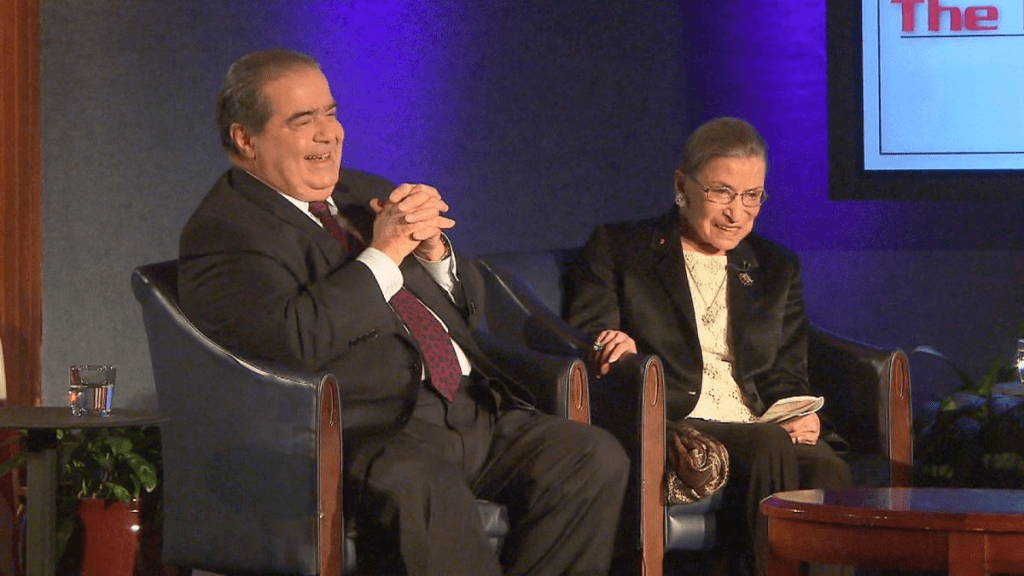







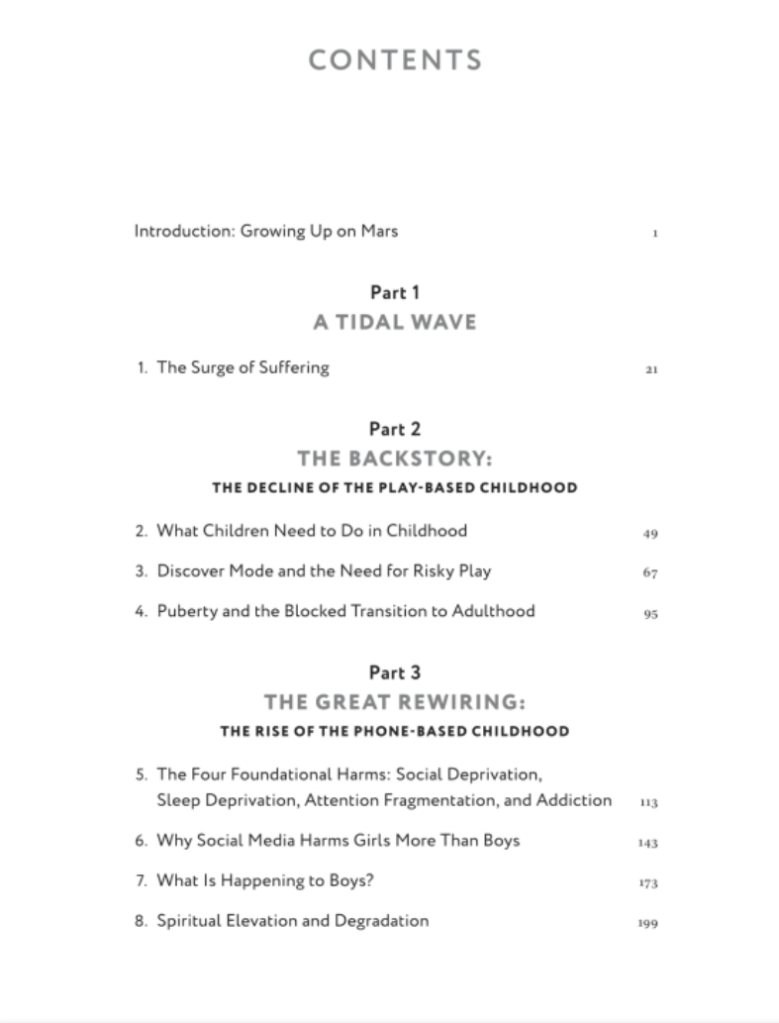

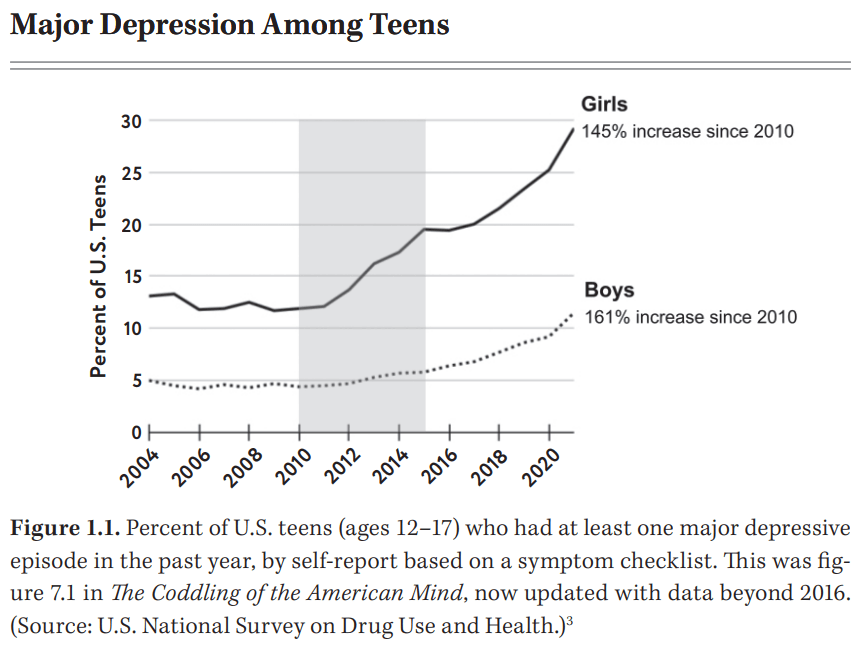
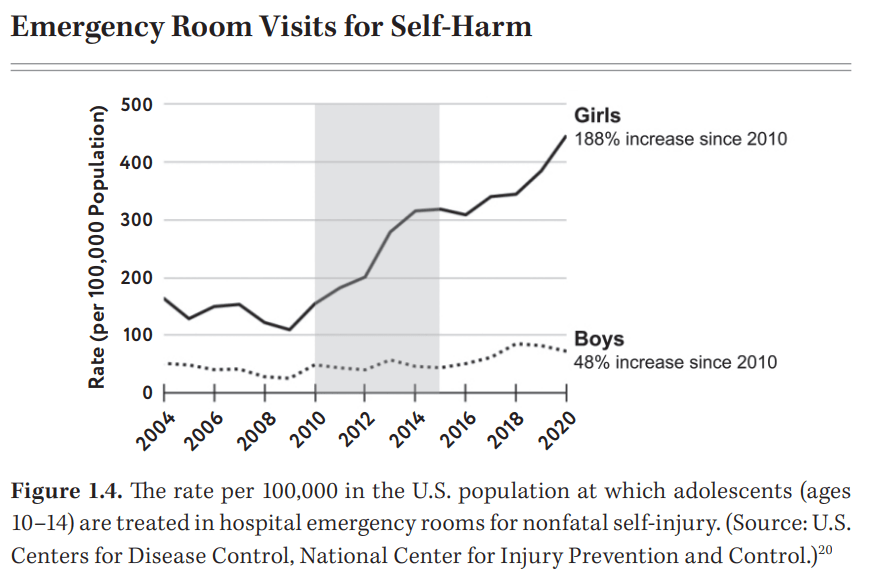
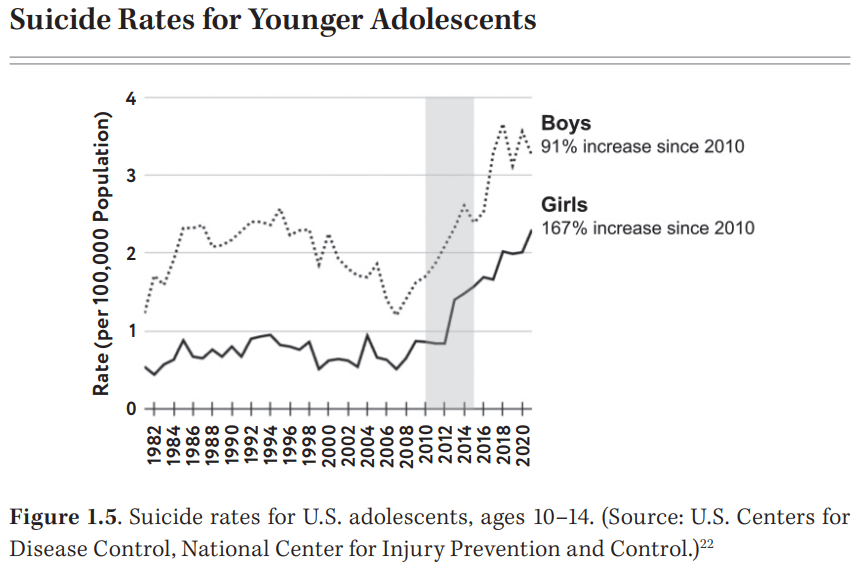

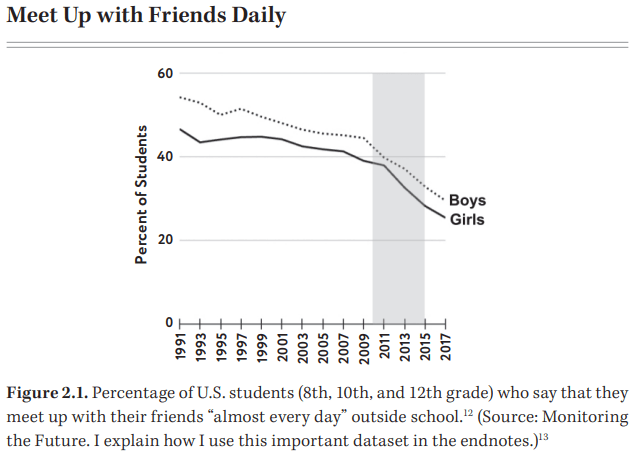


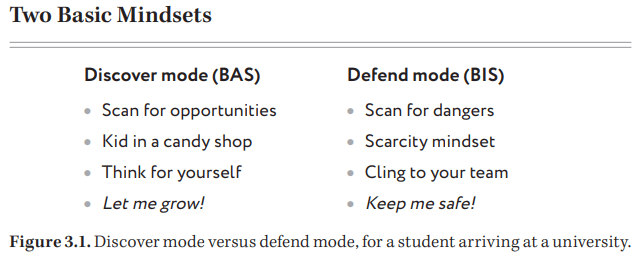

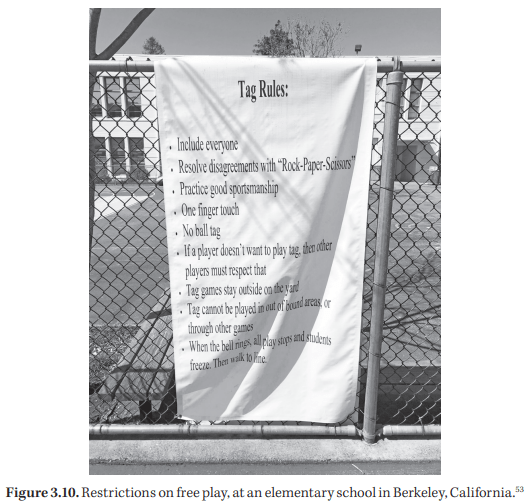
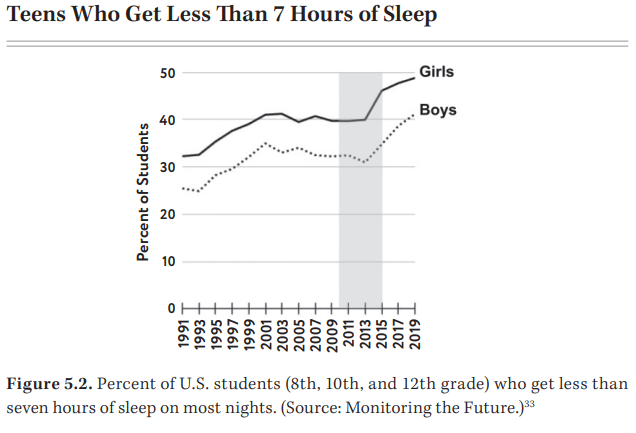

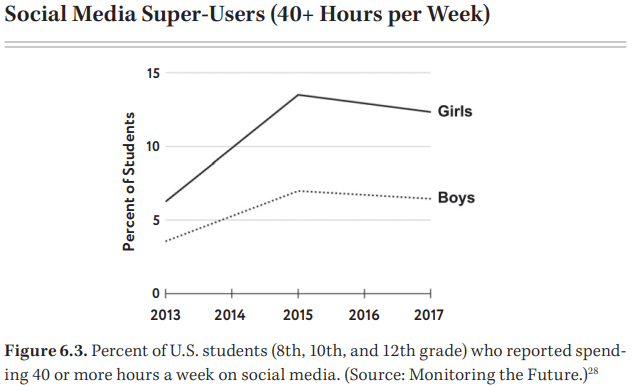
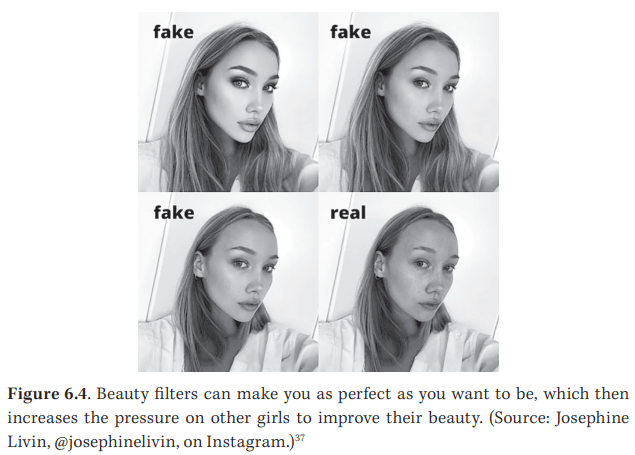
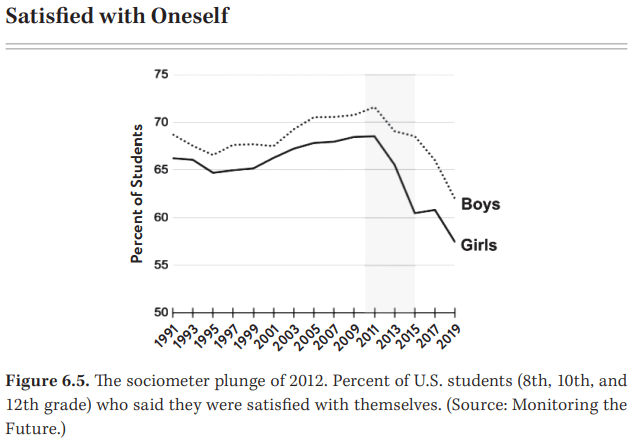

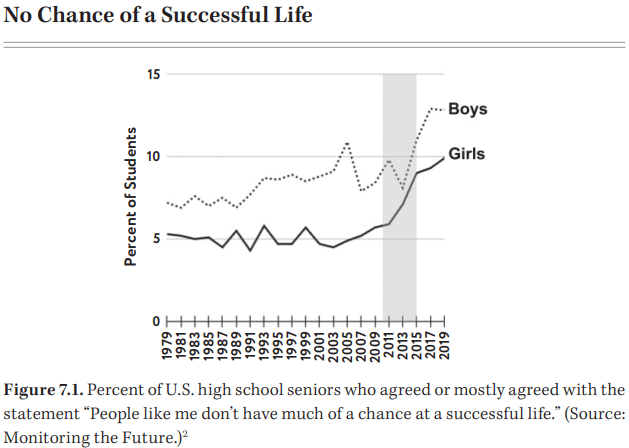
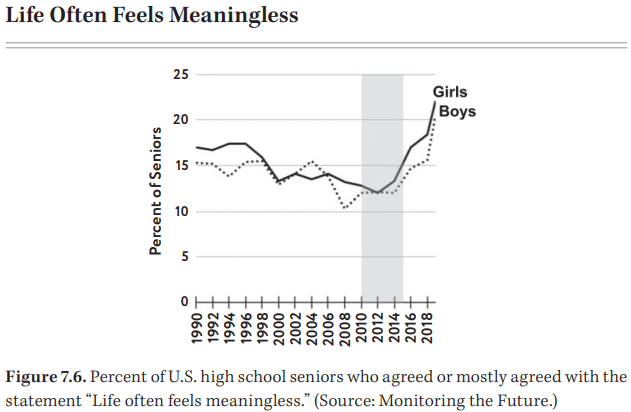
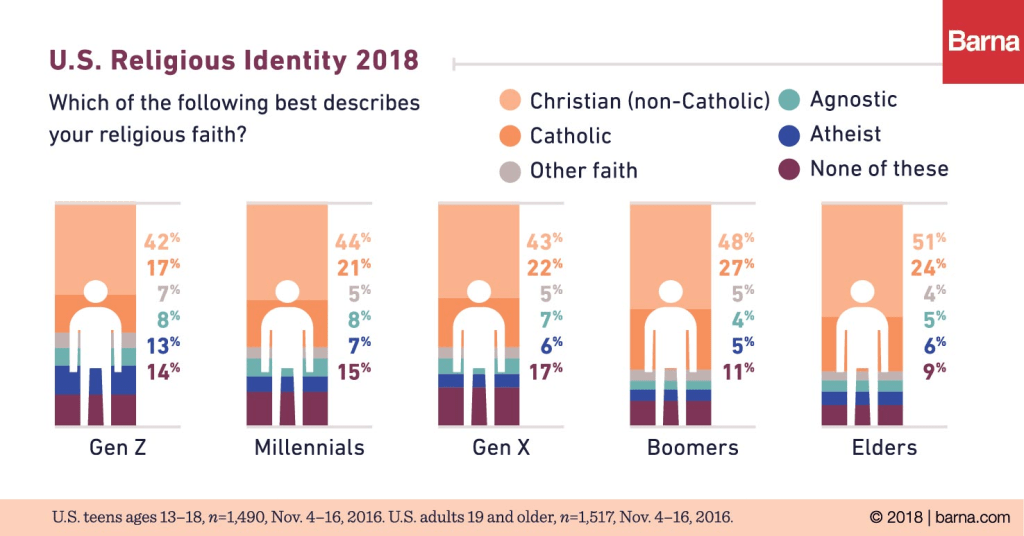



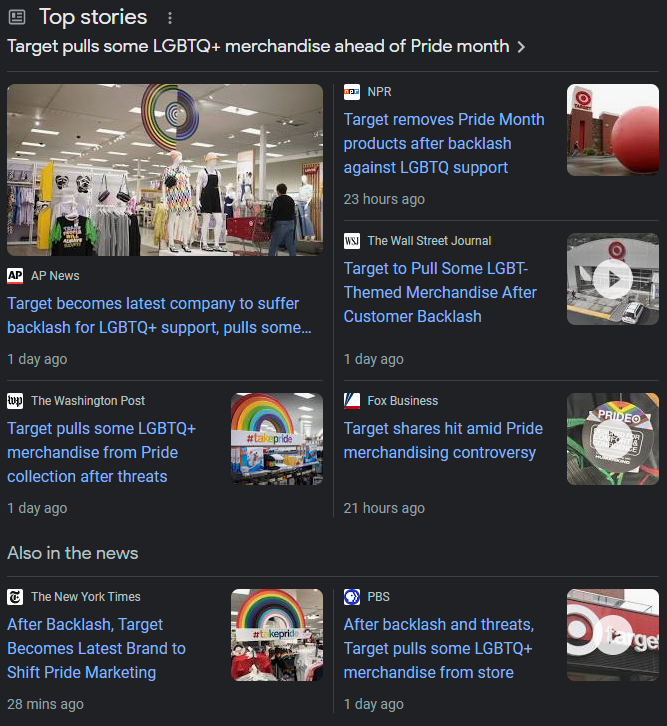



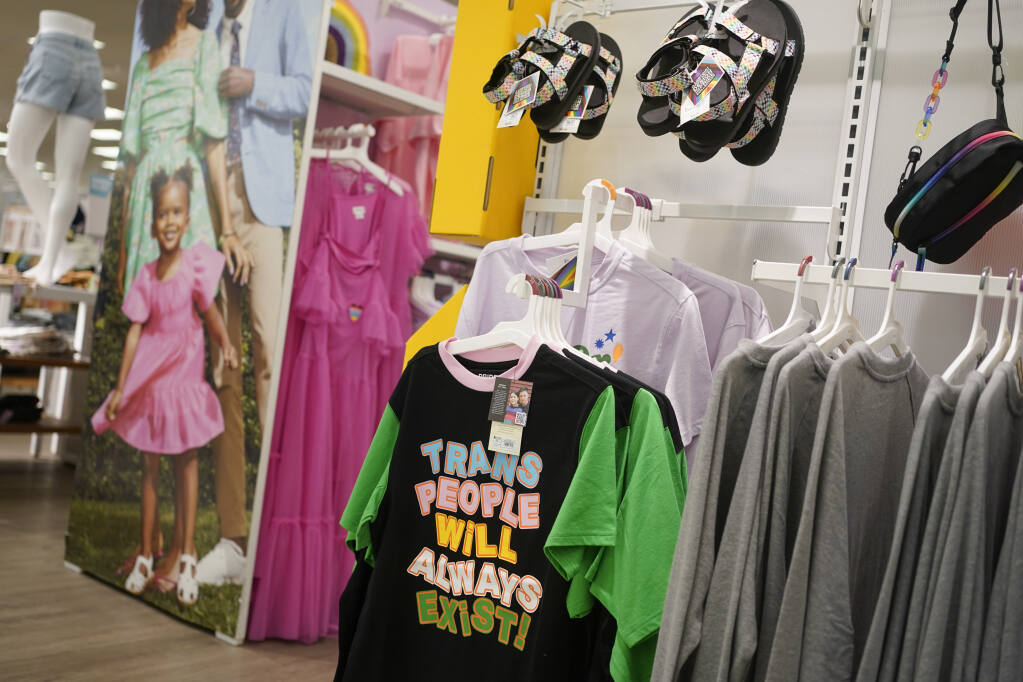


 The Great Forgetting