Believe it or not, the cause to all the problems of this world are contained within this blog post. War, gun violence, unwanted pregnancy, STD’s, theft, murder, father-less families, cheating spouses, incest, rape, child abuse, addiction – the cause to all these problems are in the words that follow.
I’m certainly not the first to propose what I’m about to share with you. This isn’t some ingenious solution I’ve come up with on my own. The answer to our problems has been known for thousands of years. The problem lies in not listening to, believing in, and living out in our personal lives what I am going to share.
Aleksandr who?
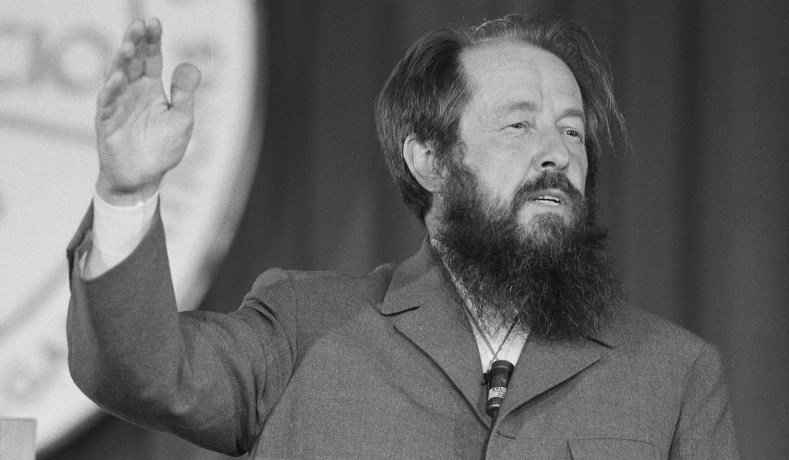
The inspiration for this post (and the title of my blog – The Great Forgetting) comes from Aleksandr Solzhenitsyn. There’s a good chance you’ve never heard of Aleksandr. Until a few months ago I too had never heard his name. A short bio from Wikipedia provides an introduction to Solzhenitsyn.
Aleksandr Solzhenitsyn (December 1918 – August 2008) was a Russian writer. A prominent Soviet dissident, Solzhenitsyn was an outspoken critic of communism and helped to raise global awareness of political repression in the Soviet Union, in particular the Gulag system.
Solzhenitsyn was born into a family that defied the Soviet anti-religious campaign in the 1920s and remained devout members of the Russian Orthodox Church. However, Solzhenitsyn lost his faith in Christianity, became an atheist, and embraced Marxism–Leninism.
While serving as a captain in the Red Army during World War II, Solzhenitsyn was arrested by the SMERSH and sentenced to eight years in the Gulag and then internal exile for criticizing Soviet leader Joseph Stalin in a private letter. As a result of his experience in prison and the camps, he gradually became a philosophically-minded Eastern Orthodox Christian.
On May 10, 1983 Solzhenitsyn gave a speech in accepting the Templeton Prize for Progress in Religion, which is the inspiration for this post. Prior to winning the Templeton award, Solzhenitsyn also won the Nobel Prize in Literature in 1970. Clearly, he was a respected writer and religious thinker.
The opening words in his Templeton acceptance speech provided truth for Russia in 1983, and I would argue, for America in the 21st century. Solzhenitsyn said:
More than half a century ago, while I was still a child, I recall hearing a number of older people offer the following explanation for the great disasters that had befallen Russia: “Men have forgotten God; that’s why all this has happened.”
Aleksandr Solzhenitsyn
Carl Trueman, in his book titled, The Rise and Triumph of the Modern Self, summarizes a modern reflection on Solzhenitsyn’s opening words. Trueman writes:
This answer is also a valid explanation for the crises enveloping in the West today, including the widespread falling away from faith, the disintegration of the family, a loss of communal purpose, erotomania, erasing the boundaries between male and female, and a general spirit of demonic destruction that denies the sacredness of human life. Because men have forgotten God, they have also forgotten man; that’s why all this happened.
Carl Trueman
Solzhenitsyn continues his speech, stating:
The failings of human consciousness, deprived of its divine dimension, have been a determining factor in all the major crimes of this century.
Aleksandr Solzhenitsyn
All one needs to do to confirm the aforementioned statement is look back on the 20th century, arguably, the deadliest century in the history of the universe. Over 100 million people lost their lives between 1934 and 1976.
- Nazis: 1934-1945 | 17 million killed
- USSR: 1922-1953 | 23 million killed
- China: 1943-1976 | 78 million killed
What do all these wars have in common? They were all lead by atheistic regimes. None of these wars were for religious reasons. In fact, out of 1,763 wars surveyed over 10,000 years, religiously motivated or affiliated wars comprised, in total, 7% of all deaths. Apologist, Wesley Huff, offers a great infographic illustrating these stats.

So without further ado, here are my top reasons (they are in no particular order, just the order they came to me as I was writing) why God has been forgotten by so many in this world. These are not meant to be “self-righteous” in any way. I have forgotten God in all of the ways I’m going to discuss. Because of our sinful nature we will naturally “forget” God. However, as we become more like Christ this should happen less as we mature in him.
Reason #1 Why have we forgotten God: Material Success
One could posit many reasons why we’ve forgotten God, especially in America. Material success is the first reason that comes to my mind. I would argue, Americans take it for granted all that God has blessed us with. I’m not denying that some people endure hardship in the U.S., but most people have food, clothing, clean water, electricity, etc. to spare. When nearly 90% of the population has a smartphone it’s hard to argue many are facing despair! It’s easy to forget God when you have no perceived need of him. Just ask the Israelites.
Beware lest you say in your heart, ‘My power and the might of my hand have gotten me this wealth.’ You shall remember the LORD your God, for it is he who gives you power to get wealth,
Deuteronomy 8:17-18
Reason #2 Why have we forgotten God: Hyper-individualism
Hyper anything is rarely a good thing, and it’s especially bad when it comes to individualism in America. Aside from a Great Forgetting taking place, a great shifting in mankind’s focus has also occurred in recent times. Instead of looking outward to God (and even to other people) mankind’s focus has shifted inward toward himself. We have become a world increasingly full of narcissists – a “selfie-society” focused on promoting a me, me, me attitude.
Narcissism is increasing in modern Western societies and this has been referred to as a “narcissism epidemic”. The endorsement rate for the statement “I am an important person” has increased from 12% in 1963 to 77–80% in 1992 in adolescents.
Scores of self-reported grandiose narcissism, assessed by the Narcissistic Personality Inventory (NPI), have increased. Twenge and Campbell reported a significant increase in NPI scores in a cross-temporal meta-analysis of American college students between 1979 and 2006. NPI scores were 30% higher in the most recent cohort compared with the first cohort.
National Institutes of Health, 2018
Reason #3 Why have we forgotten God: Biblical Ignorance
It’s easy to forget what you never knew, and unfortunately when it comes to knowing God, most Christians in America rarely open their Bibles. According to a Barna State of the Bible 2021 study, only 9% of people in the U.S. read the Bible at least once a week. How are you going to know someone you never spend time with?
If you abide in my word, you are truly my disciples, and you will know the truth, and the truth will set you free.
Jesus, John 8:31-32
Reason #4 Why have we forgotten God: Government Controlled Education
It’s easy to forget about God when he is stripped from the education of most children in America, of which 90% attend public schools. I’m NOT saying there aren’t lots of great God-focused educators in the public education system. What I am saying is their hands, or more literally their mouths, are tied shut when it comes to God. Ask any public educator if they are able to openly talk about their faith, Jesus, etc. with students and they will in most cases tell you “no”, at least not without negative repercussions. I’m not advocating that we need to start each day of public school with Bible study like I do with my homeschooled children, but when the Bible, prayer, etc. is removed from the daily lives of most children it’s easy to see why God is unknown or forgotten.
Reason #5 Why have we forgotten God: Politics
Blame it one the politicians, right? Politicians also play a role in the Great Forgetting. This is especially true from a leftist perspective where the God of the Bible is but a distant memory from years past. Left-leaning legislation (especially on moral issues) is rooted in a secular worldview that denies absolute moral truth and centers entirely on personal happiness, ignoring God’s unchanging moral law. Whenever I think about politicians who claim to be “disciples of Jesus” (this usually comes from the right side of the aisle) the following verse comes to mind.
By this all people will know that you are my disciples, if you have love for one another.
Jesus, John 13:35
It’s quite challenging to see any “love” in Washington D.C. even though many politicians will refer to their “friends across the aisle”. Do friends speak about one another like politicians do every day on cable news? I wouldn’t have any friends if I did. If there is any love in D.C. it’s not visible from my perspective.
The solution: Christians need to take a stand!
Many Christians across the world, myself included, have failed to take a stand for Christ in a culture that is collapsing under the weight of a denial of God’s truth. It’s too easy to be complacent with what’s happening in the world, rather than being courageous and standing up for truth.
Some might believe we need only share the “love of Jesus”, which is true, but hardly enough. Keep in mind Jesus said:
Do not think that I have come to bring peace to the earth. I have not come to bring peace, but a sword. For I have come to set a man against his father, and a daughter against her mother, and a daughter-in-law against her mother-in-law. And a person’s enemies will be those of his own household.
Matthew 10:34–36
Jesus said, the enemies of a person will be those of his own family, so don’t be surprised when persecution comes your way, even from those you may live with! Some might also argue persecution is a positive sign to what you’re doing. Jesus never said being his disciple was going to be easy. He said the opposite (see John 15:18-16:4, and 16:33). Jesus also never avoided calling out anyone doing what he disagreed with (see Matthew 23:1-26).
4 R’s to Remembering God and Taking a Stand for Christ
Developing courage and remembering God starts with you. It’s a process and begins with each of us as individuals centering our lives on Jesus. Jesus said, “Seek first the kingdom of God and his righteousness” (Matthew 6:33). If we seek him first there is little chance of forgetting.
Four R’s I’ve found helpful in my quest to being more courageous and remembering include:
- Read: Open the Bible each day.
- Reflect: Journal on what you’re reading.
- Retain: Memorize Scripture.
- Respond: Engage and share when it makes sense to do so.
Think of these as “steps”, each one building on the previous. Start slow. There’s nothing wrong with just reading each day for a month or two before moving on to reflection. Holy Spirit will prompt you with reflective writing when the time is right. Thoughts will come to mind you won’t want to forget, so write them down when they come.
As you read and reflect you’ll also note when key verses and / or sections of Scripture touch your heart and mind you’ll want to retain. Jesus provided one of the key reasons to memorize Scripture when he was tempted in the wilderness (see Matthew 4:1-11).
What did he do?
He quoted Scripture.
It’s not a matter of if, but when the enemy will tempt you, and Scripture is one of the key elements in the armor of God (it’s also the only offensive weapon in the armory – see Ephesians 6:10-18).
Finally, once reading, reflection, and retention are part of your life, you’re ready to respond courageously. The key to this final R is knowing when to stand up and be courageous and when not to. This can be a challenge because some might view this as being judgmental, which almost always creates confrontation in a negative way. A better approach is to use questions to engage with others rather than being judgmental and telling people directly they’re wrong.
A few simple non-threatening questions I like to use are, “What do you mean by that?“, and “What’s lead you to believe that’s true?“
For example, someone might say, “I don’t believe in God.”
On the surface this may seem complete, but what “God” are they referring to?
The god of Islam?
The God of Christianity?
The god of Mormonism?
One of the many gods of Hinduism?
By asking, “What do you mean by that?”, you gain further insight into their thinking.
The next question, “What’s lead you to believe that’s true?” challenges them to provide evidence for why they believe what they believe. For most people it won’t go beyond their feelings, emotions, something they read on social media, etc., but if they provide real evidence it will give you something to respond to.
Regardless of what they say in response to the question, a great way to engage with them is not telling them they’re wrong, but instead saying, “Have you ever considered…” followed by explaining your logic, argument, evidence, etc. on the topic. Here’s a short example to help illustrate the tactic:
Skeptic: I don’t believe in God.
You: What do you mean by that? Which “god” are you referring to?
Skeptic: I’m not referring to any specific god of any specific religion. I’m simply saying I don’t believe in any type of “higher power” that, for example, created the universe and all it contains.
You: What’s lead you to believe that’s true?
Skeptic: I don’t know. I guess it just seems like the evidence for god existing is lacking.
You: Have you ever considered that if God doesn’t exist then life has no meaning, value, or purpose?
This could then lead to a conversation to dig deeper into how they might believe their life has meaning, value, and purpose, but without God that’s just an illusion they’ve created in their mind. If God doesn’t exists then when they die so does their created meaning, value, and purpose for their life.
Get on the battlefield!
Let there be no doubt. We are in a battle. The battle is, as Paul wrote in Ephesians 6, not directly with flesh and blood, but with the forces of evil.
Finally, be strong in the Lord and in the strength of his might. Put on the whole armor of God, that you may be able to stand against the schemes of the devil. For we do not wrestle against flesh and blood, but against the rulers, against the authorities, against the cosmic powers over this present darkness, against the spiritual forces of evil in the heavenly places.
Ephesians 6:10-12
However, we have something the evil one and his minions do not have, the armor of God. So put on your armor and get on the battlefield and have the courage to stand for the truth. With time and the 4R’s you’ll build the needed courage and at the same time help yourself and others never forget God.
Finally, when more people remember God not only in their minds, but also in the actions of their lives real, impactful, positive, and powerful change in this world is possible. The despair we may once have had will transform into desire for God and his will to be done on earth as it is in heaven.
 The Great Forgetting